Component · Copied
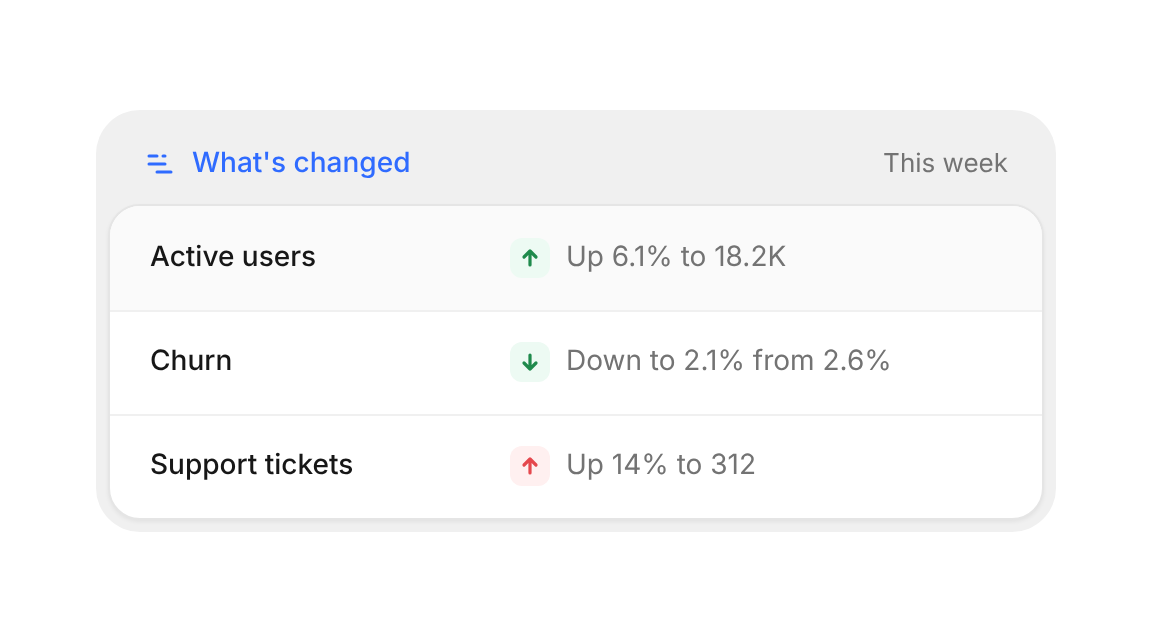
Change summary
What moved since last time – one metric per row with a colored trend
79 pieces. CSS modules on my tokens, Motion where it helps.
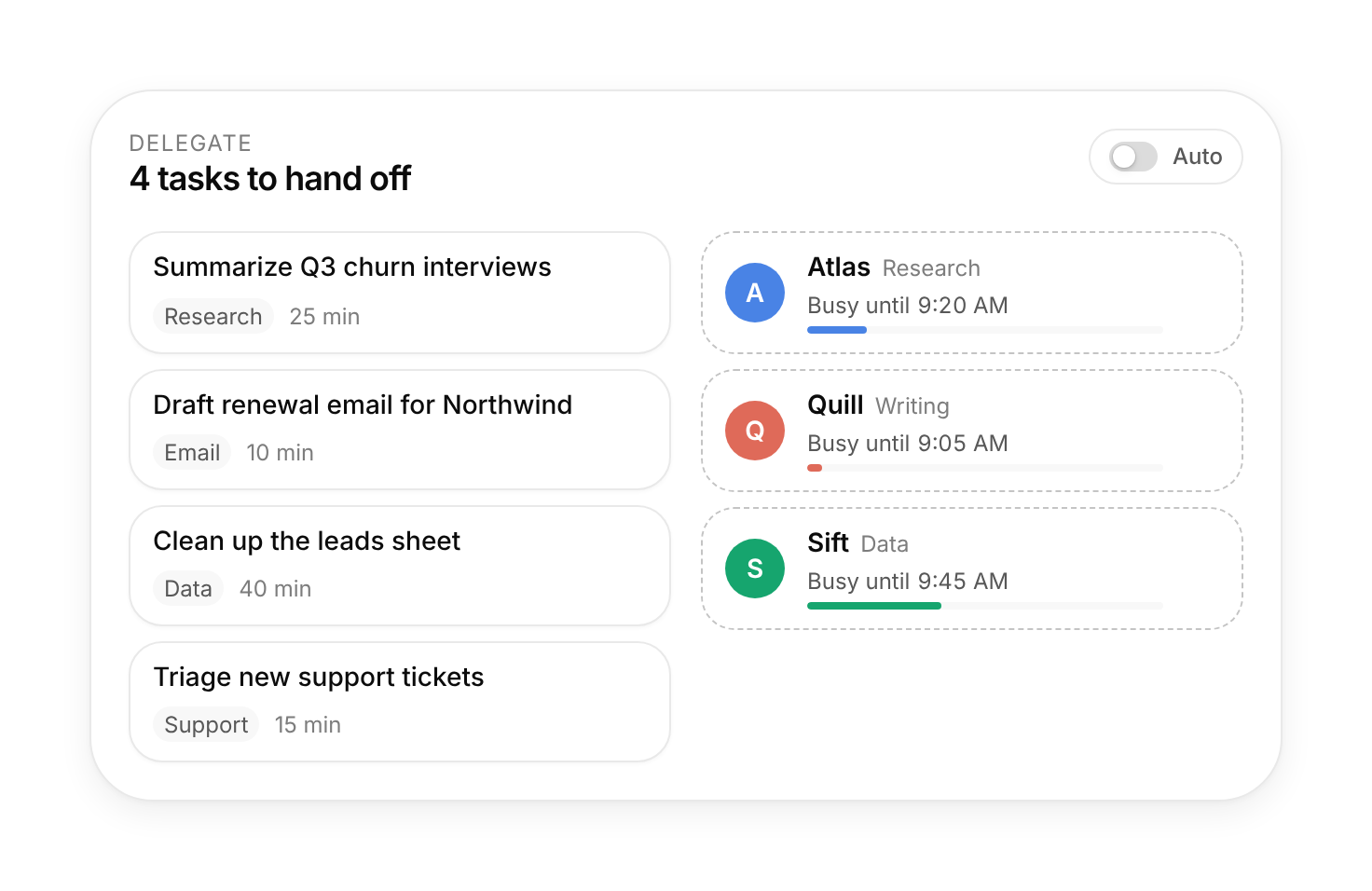
Hand tasks to agents by dragging them on; each agent previews its new "busy until" time, or switch on Auto.
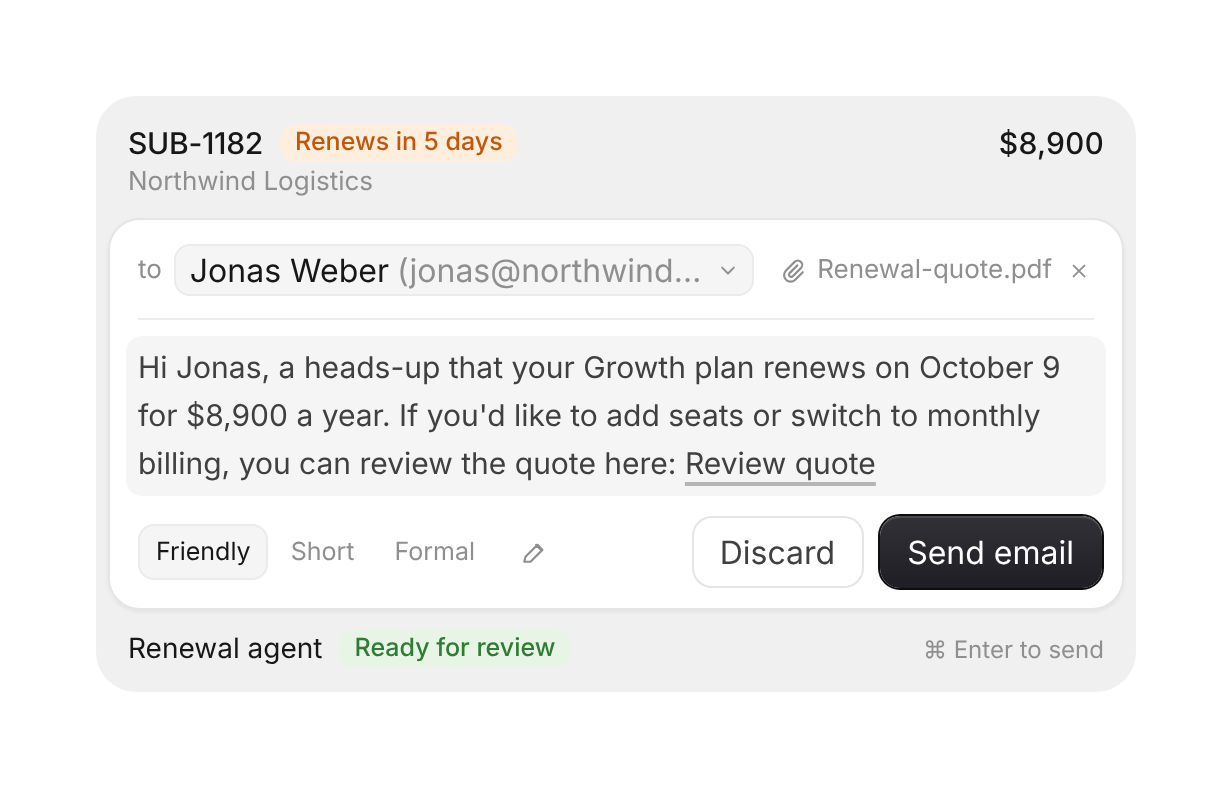
Agent-written email for review – switch recipient and tone, edit inline, remove the attachment, send or discard with undo
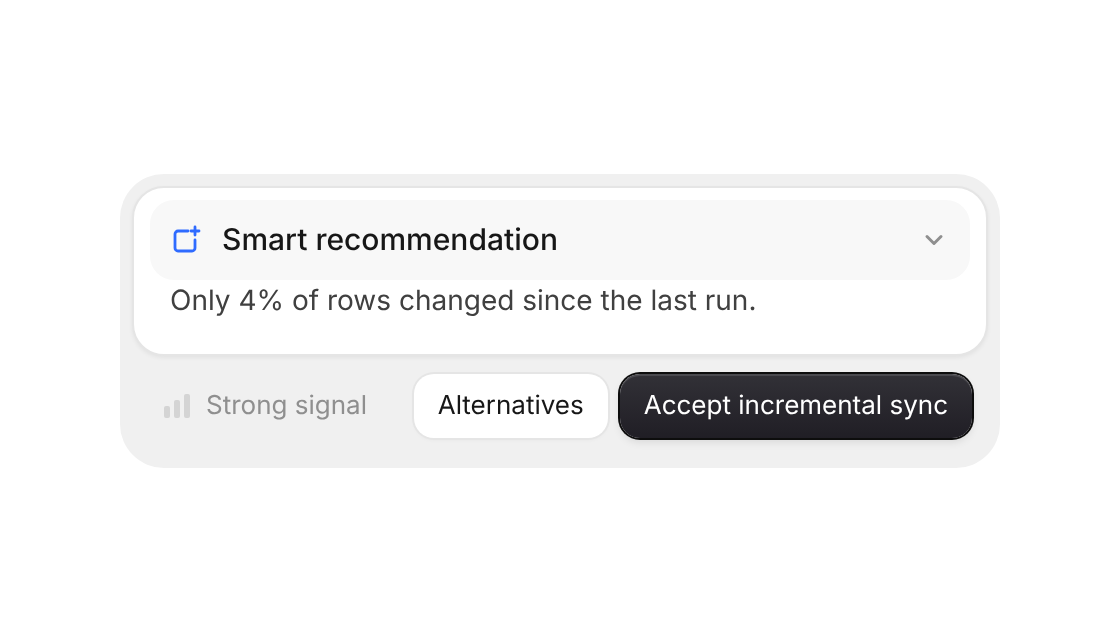
Suggestion card with a confidence signal, alternatives to switch to and accept with undo
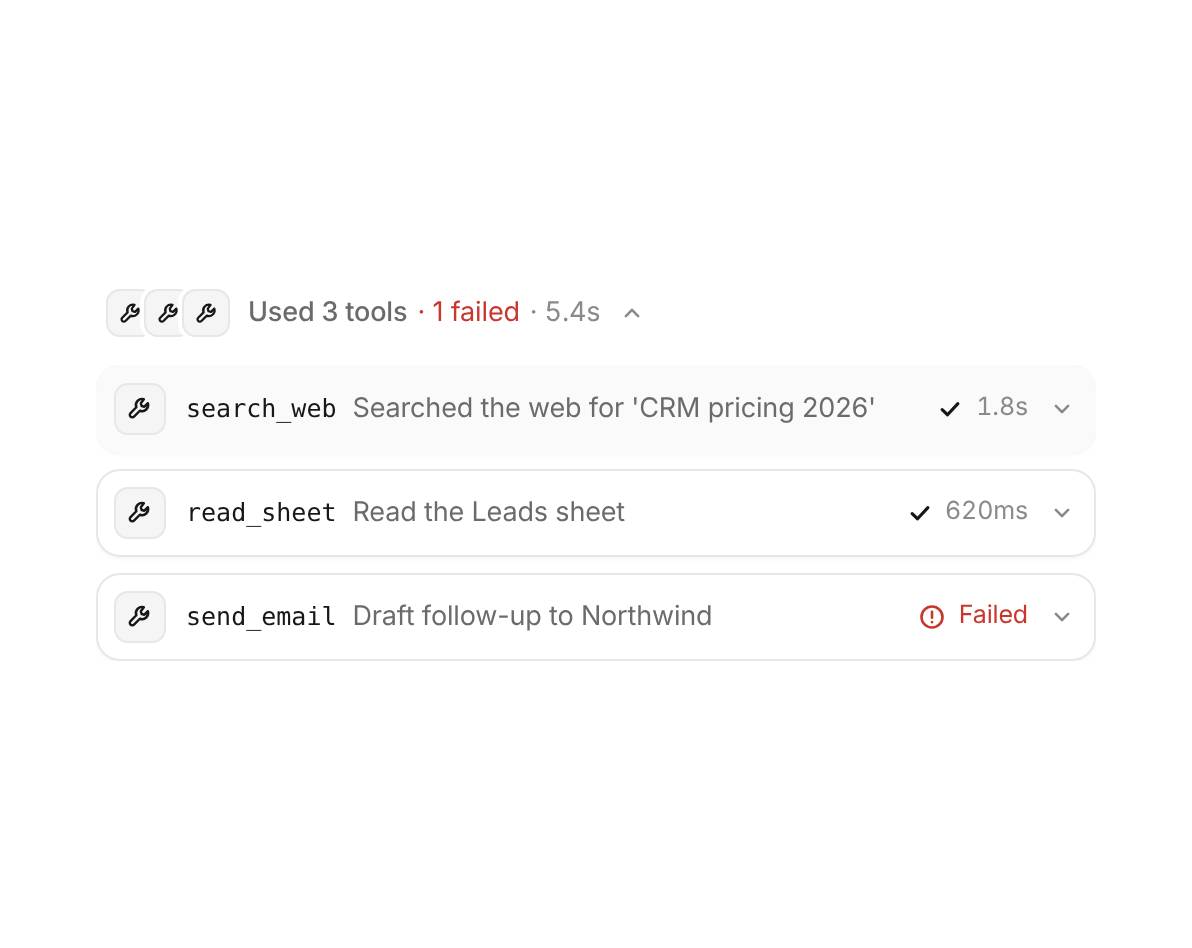
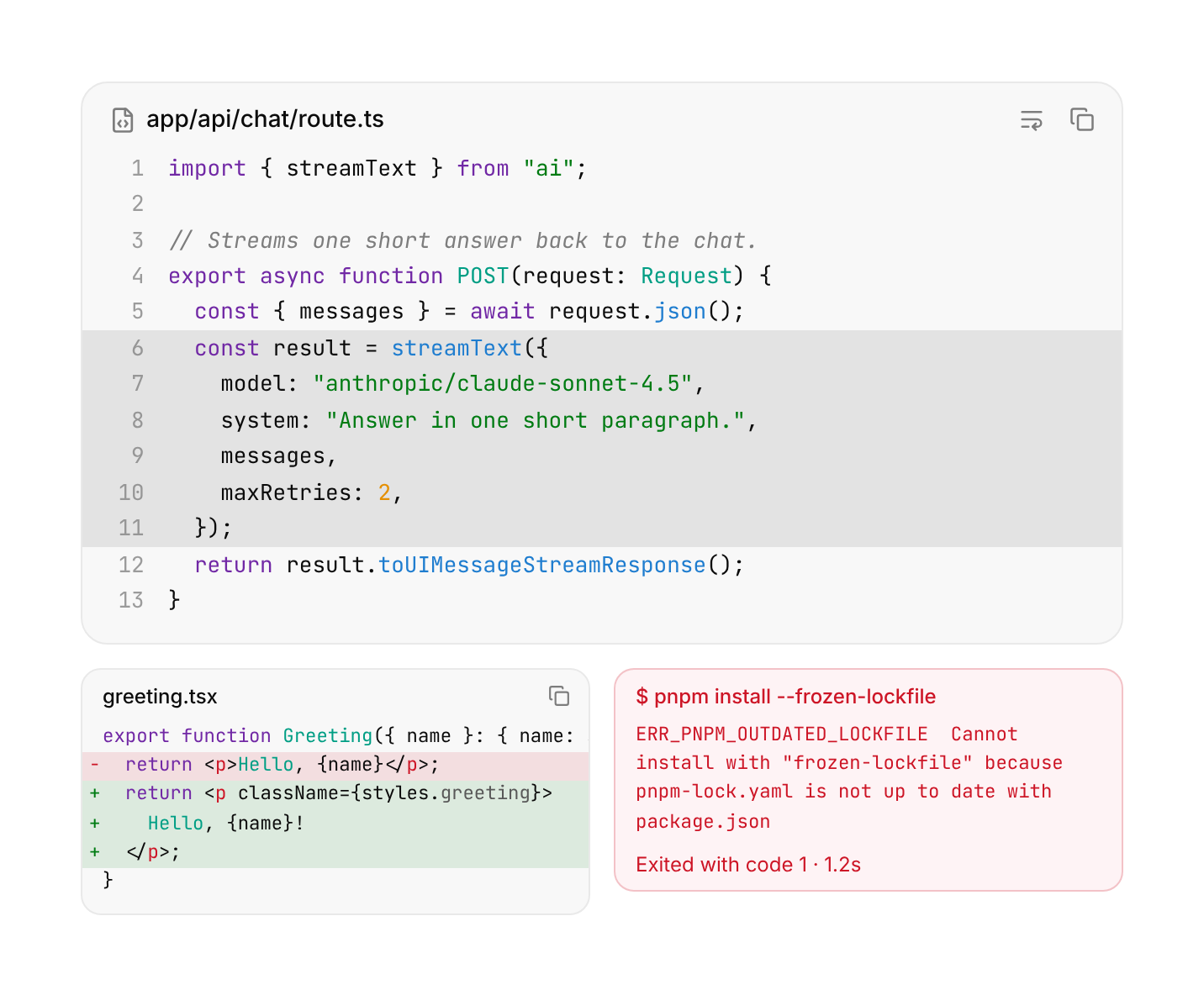
An agent's tool call in one line – live timer, status and summary, folds open to highlighted arguments and result with copy, retry on errors and a group that sums them up
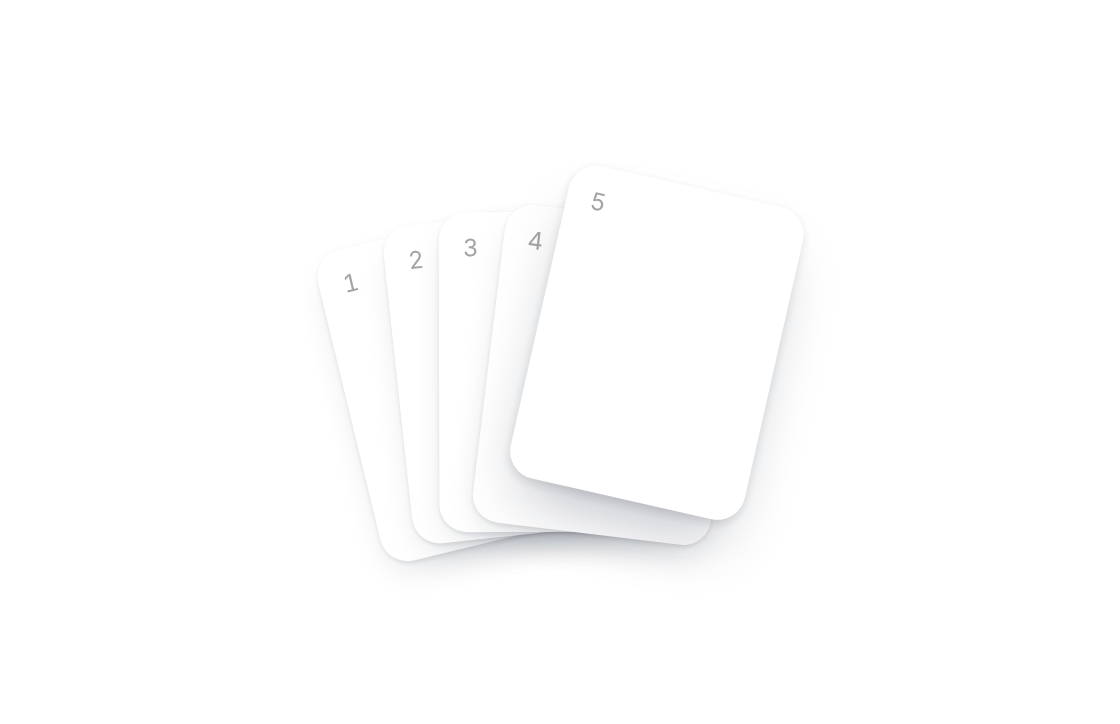
A pile of cards that fans out on hover and springs back into a scattered stack.
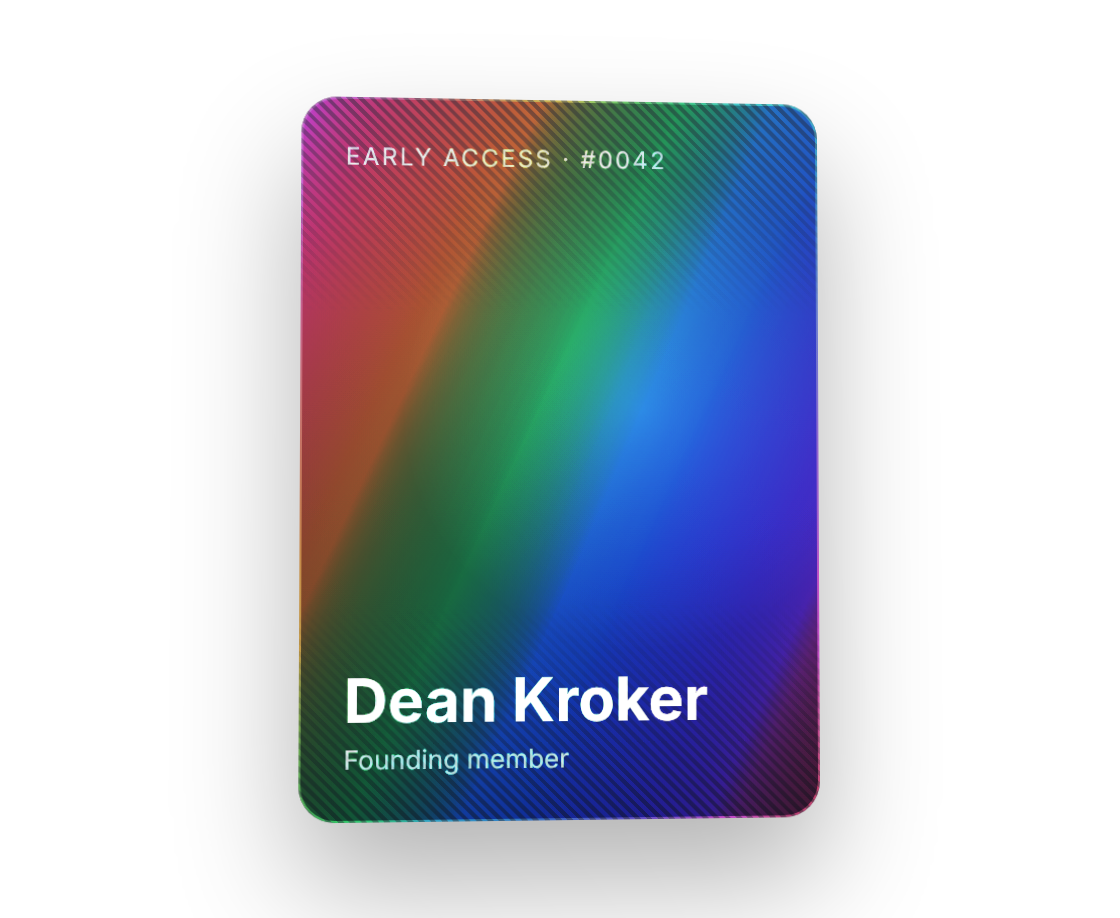
A trading-card surface with a rainbow foil that shifts as it tilts toward the pointer.
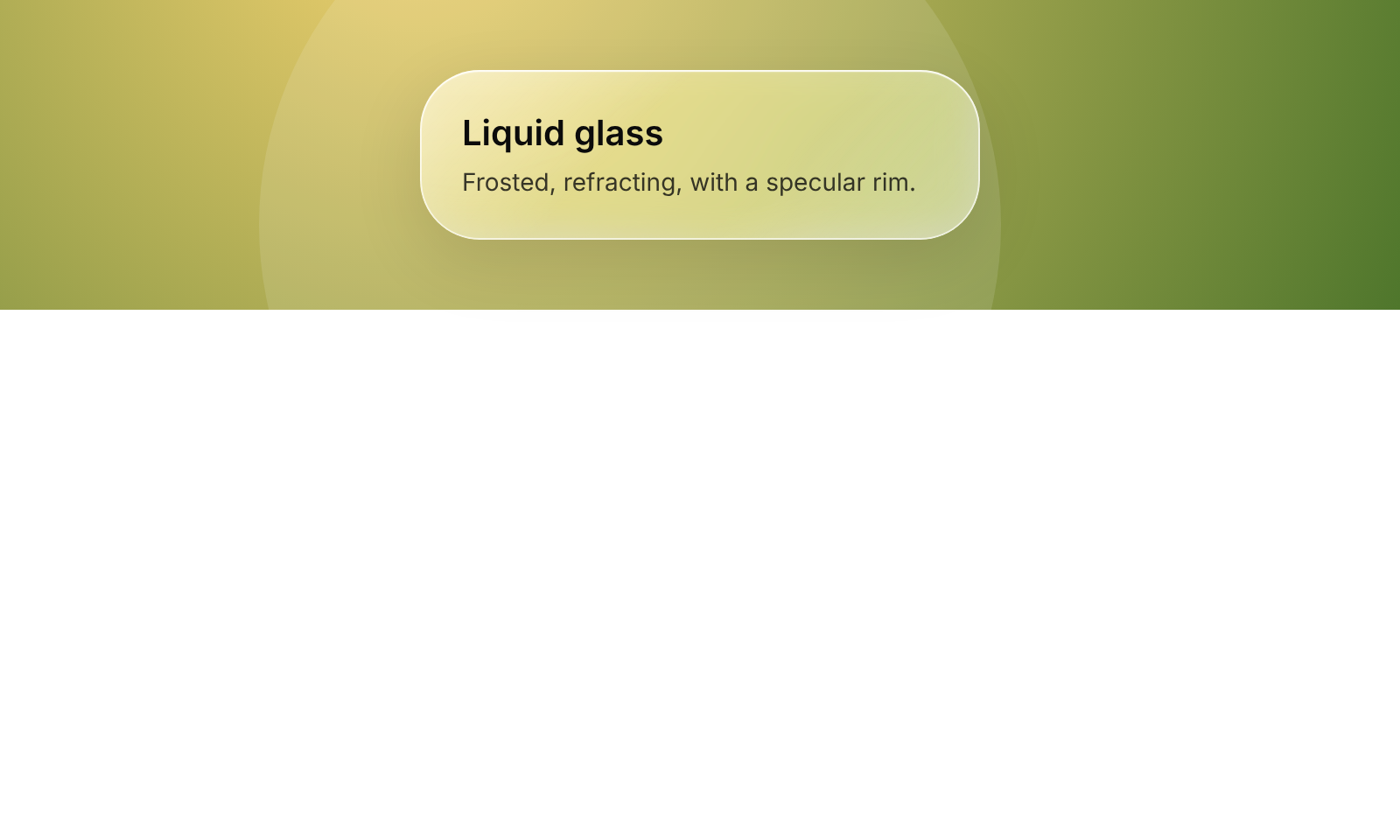
A glass panel that frosts and slightly refracts whatever sits behind it.
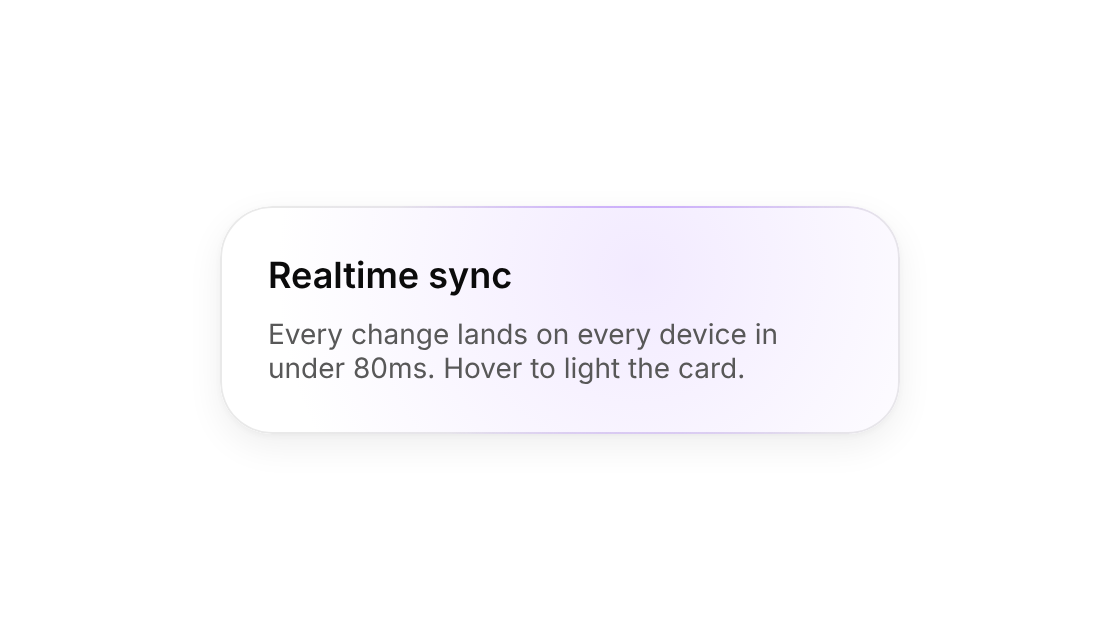
A card that lights up under the pointer, with a brighter rim where the light meets the edge.
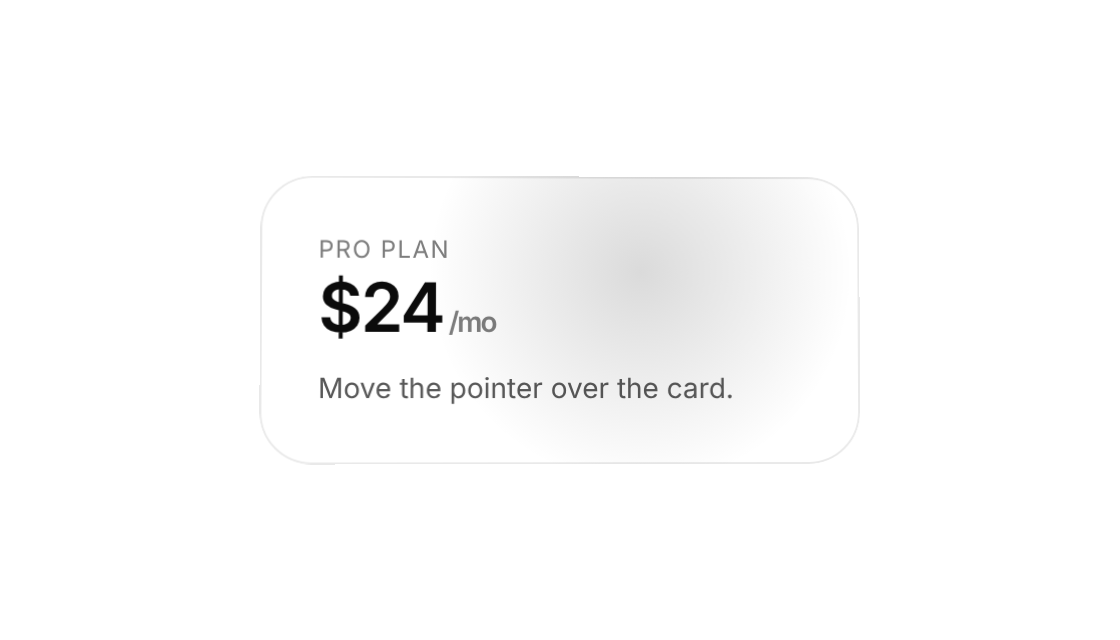
A card that leans toward the pointer in 3D with a following glare.
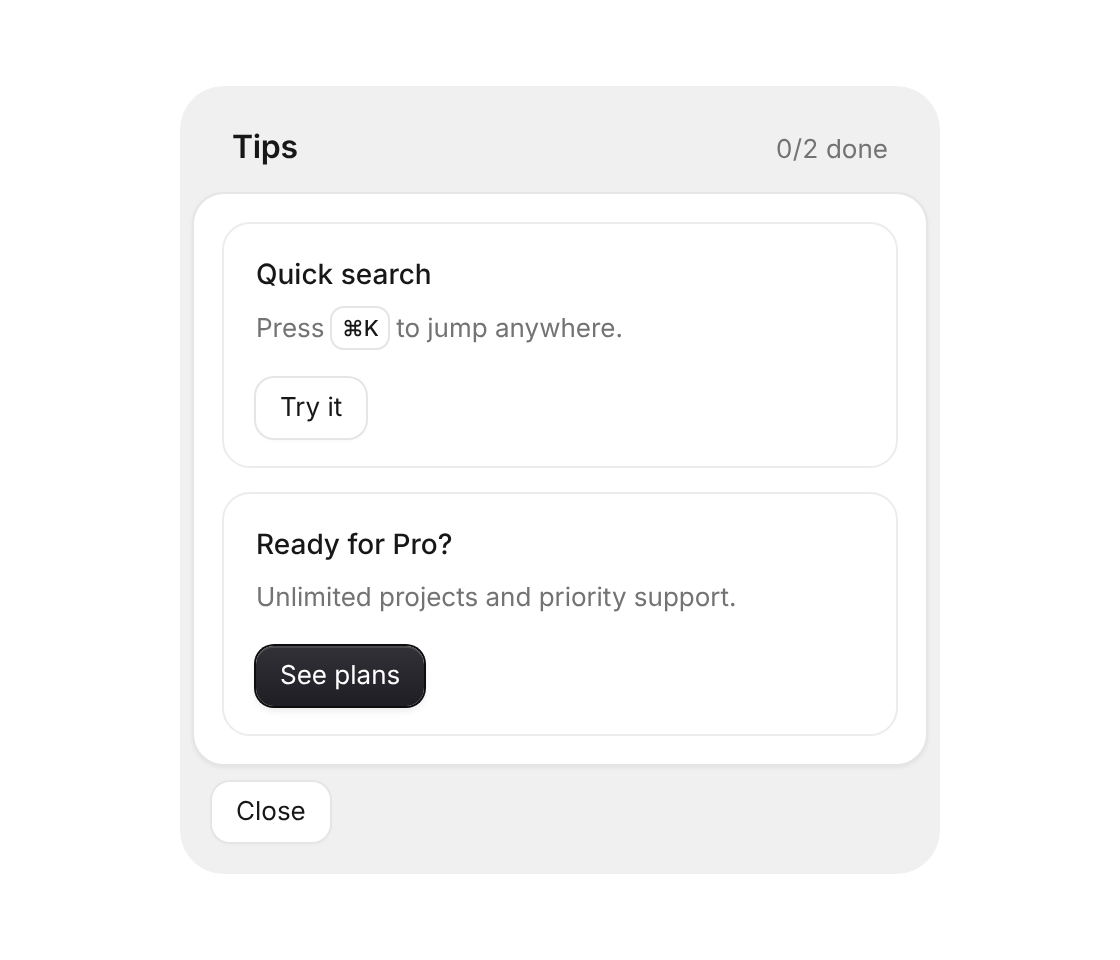
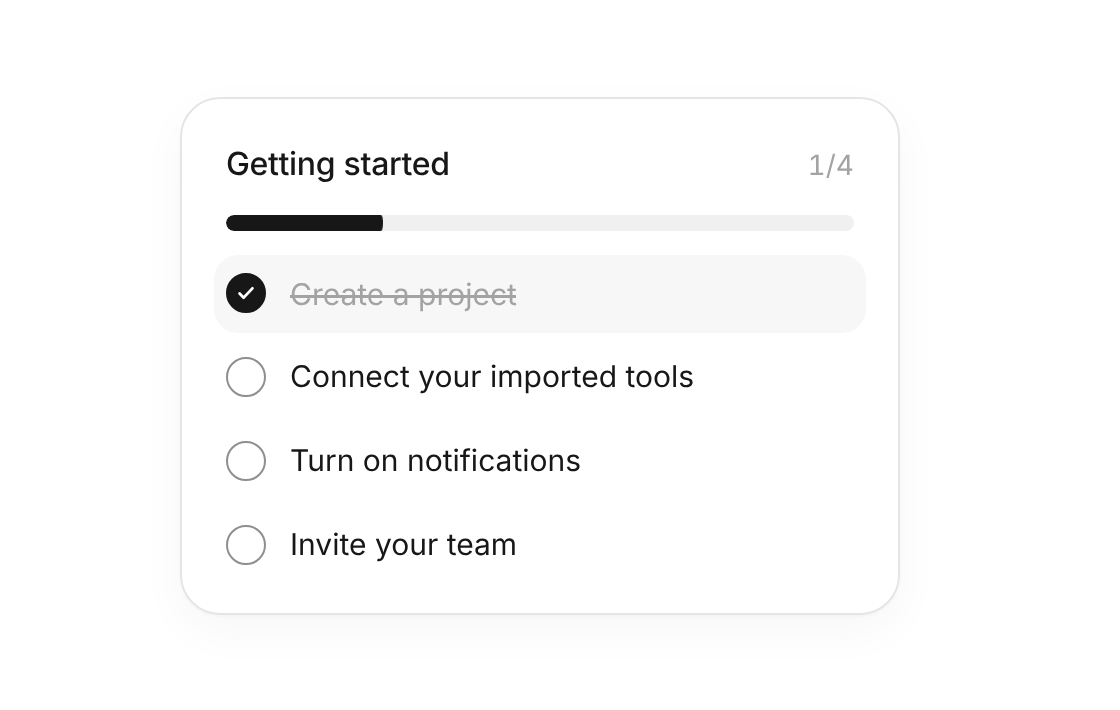
Grid of short tips with one action each – taken tips turn into a done state
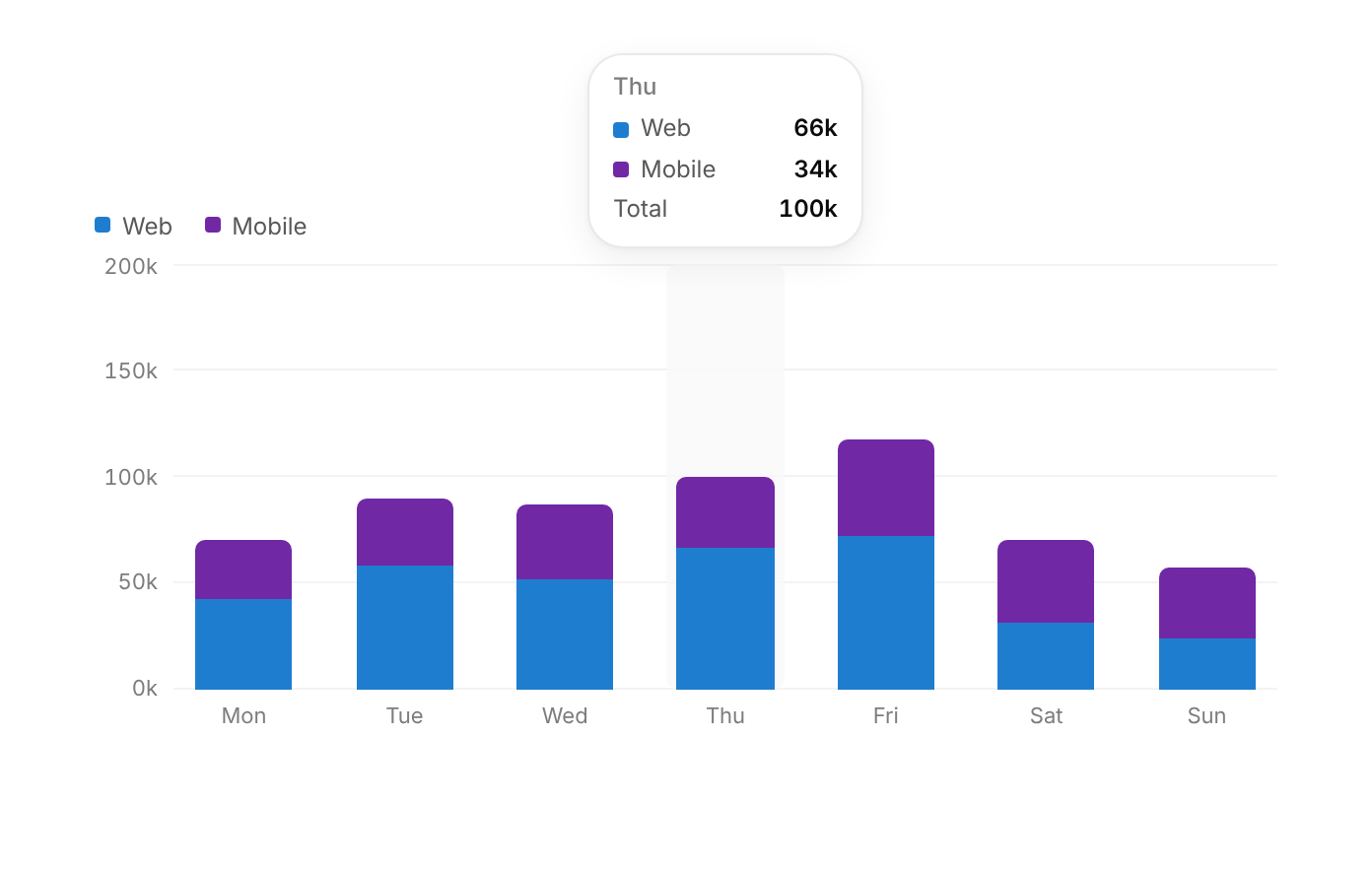
Grouped or stacked vertical bars with a value tooltip on hover or focus; every bar is reachable by keyboard.
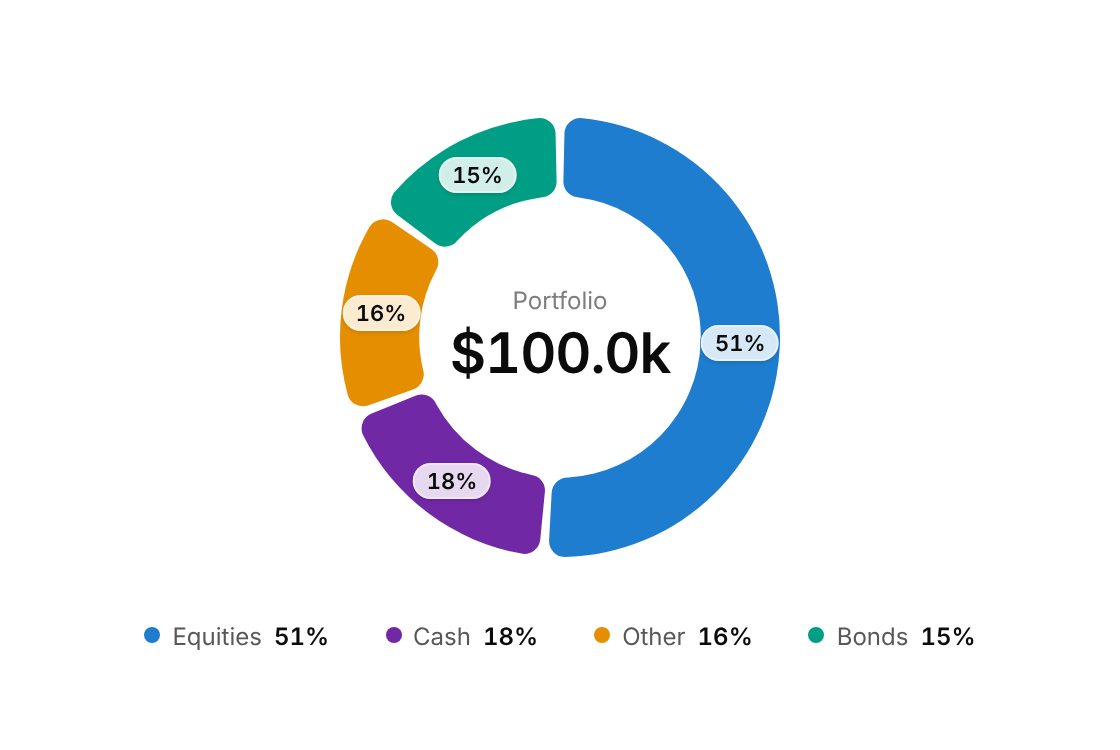
A ring of rounded, gapped slices with a centred total, percentage pills and a legend; hovering or focusing a slice lifts it out and shows its value in the centre.
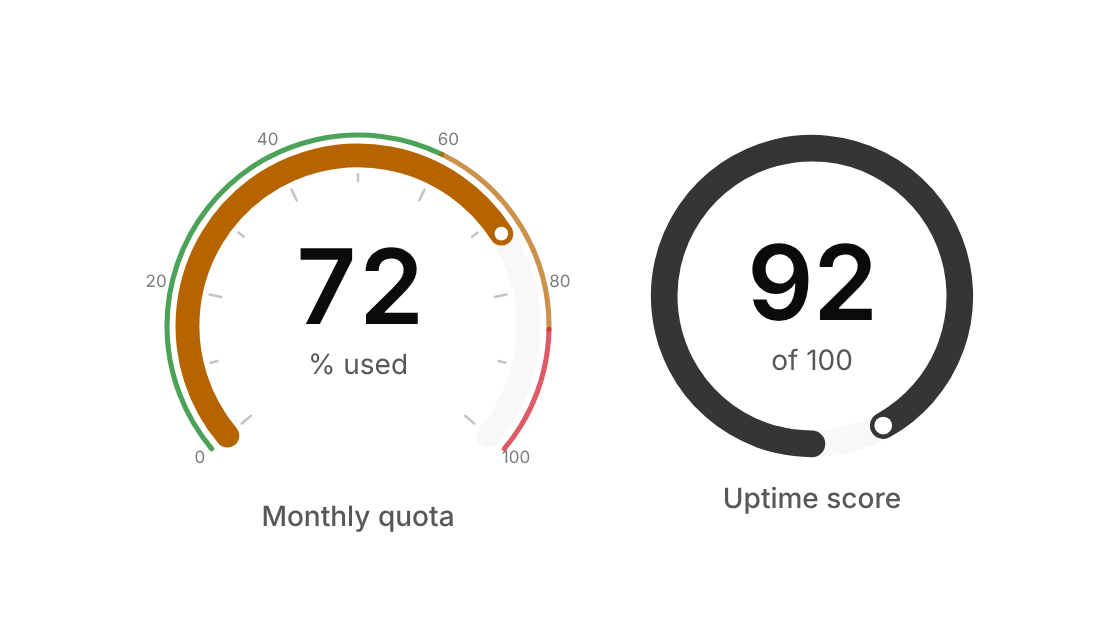
An SVG arc meter with an animated fill, ticks, coloured bands and a centred readout.
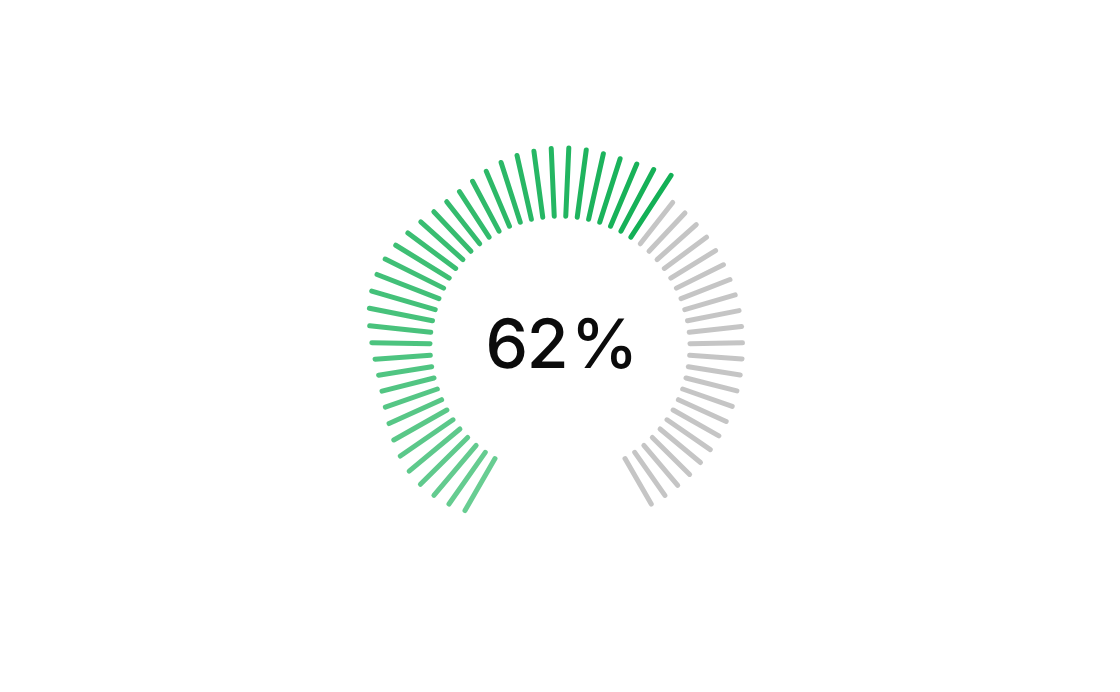
A radial tick gauge whose lit band carries a travelling wave.
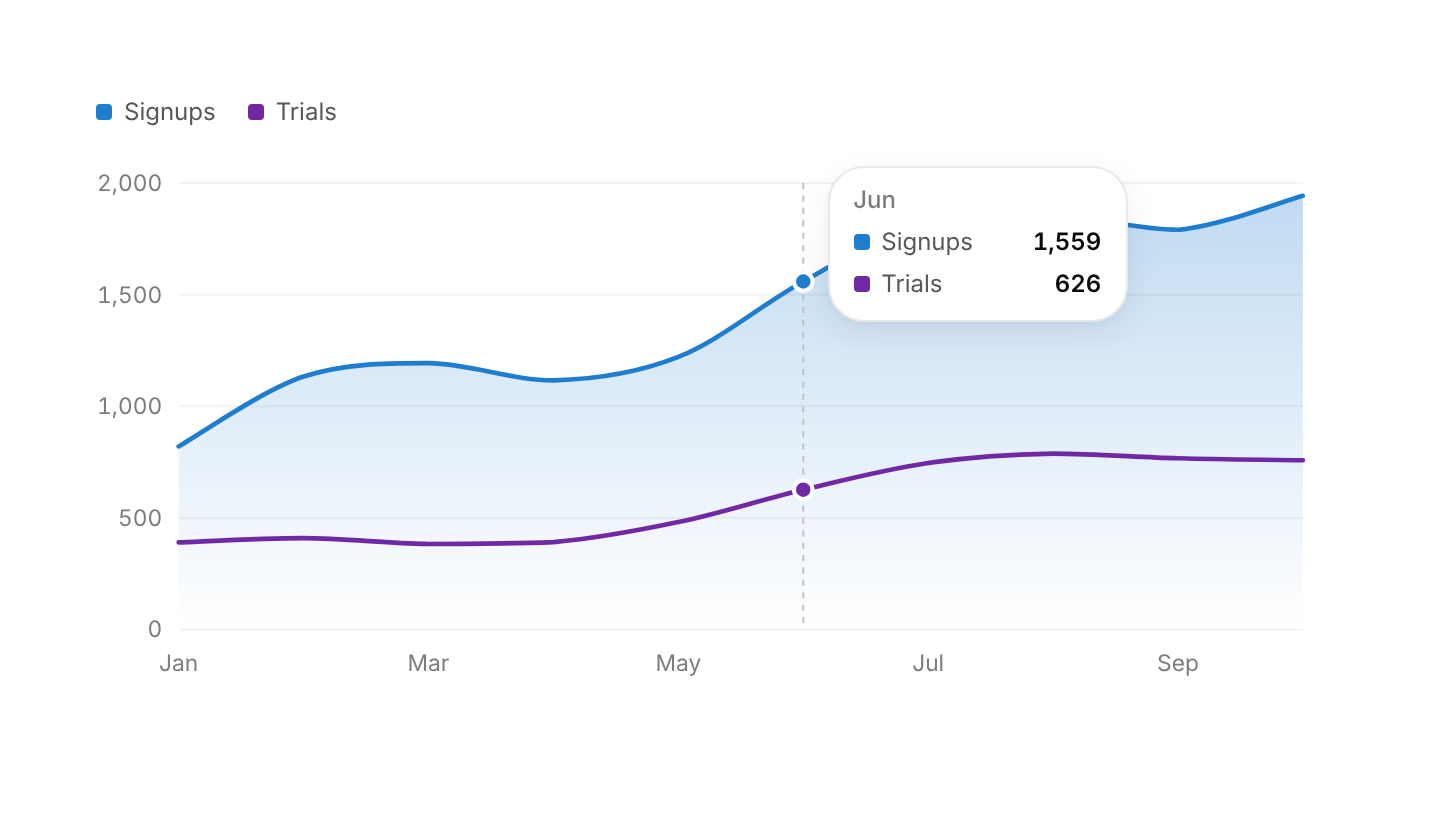
Smooth lines with a soft area fill, a shared crosshair and a tooltip; arrow keys step through the points.
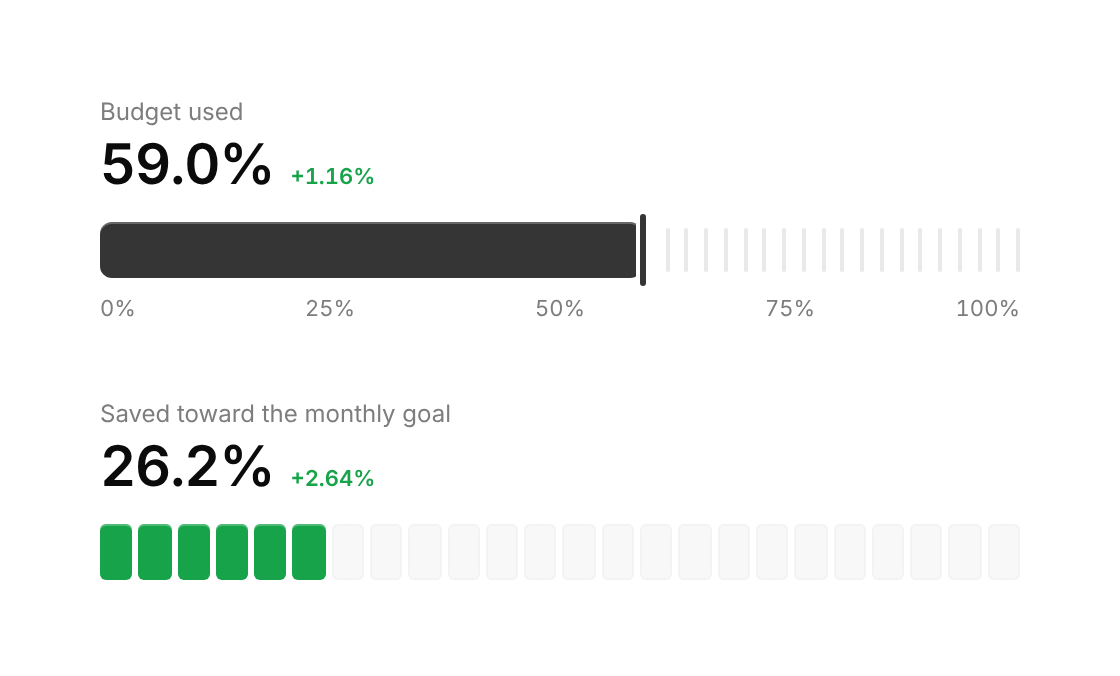
A horizontal progress meter drawn as thin ticks: a solid bar with an end marker, or discrete cells that light up, with an optional headline value, delta and scale.
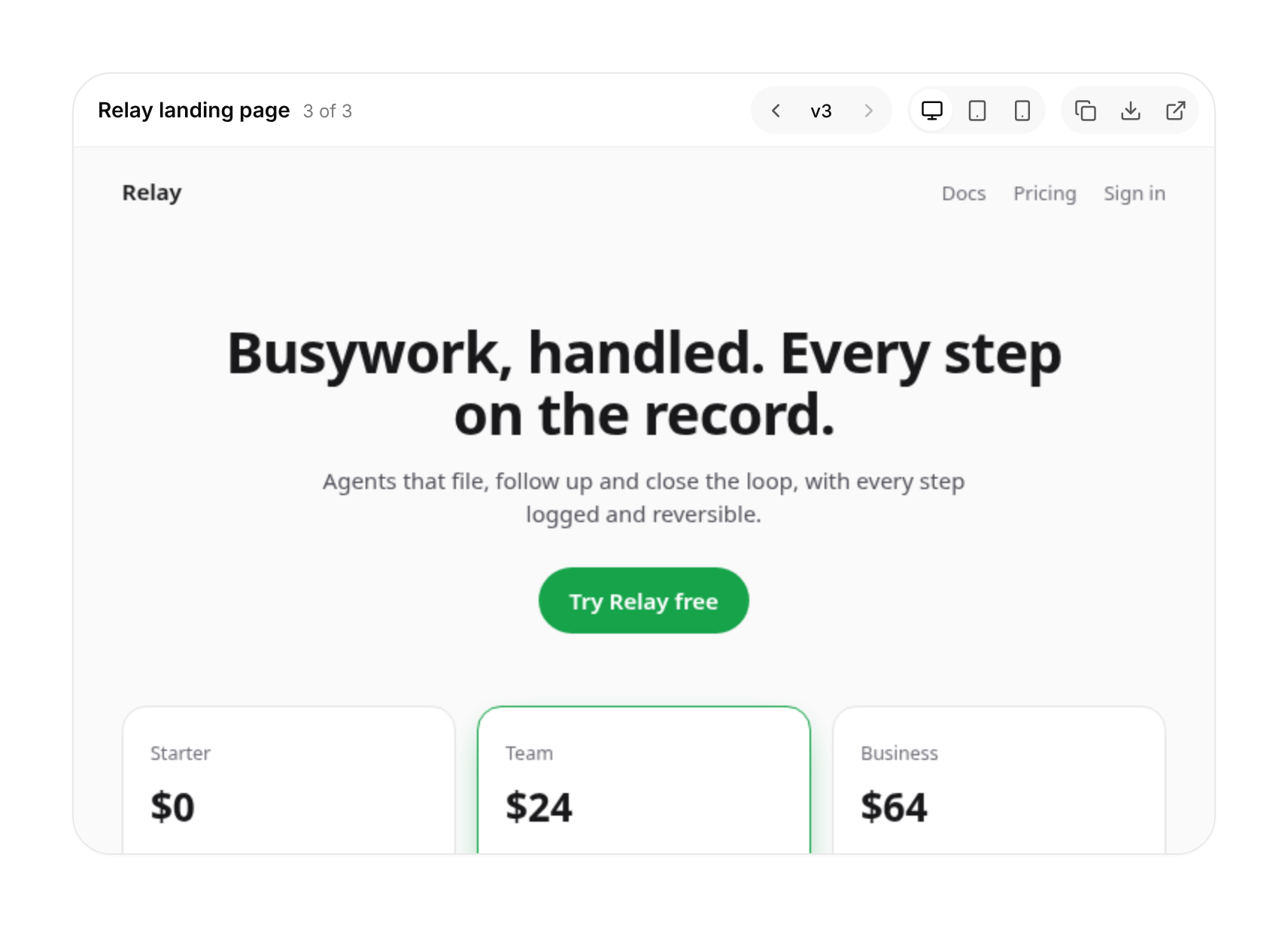
The pane beside an AI chat that shows the HTML page the model is writing: a live, scriptless draft while it streams, then sandboxed versions that swap in without a flash, with a version stepper, desktop / tablet / phone widths, and copy, download and open.
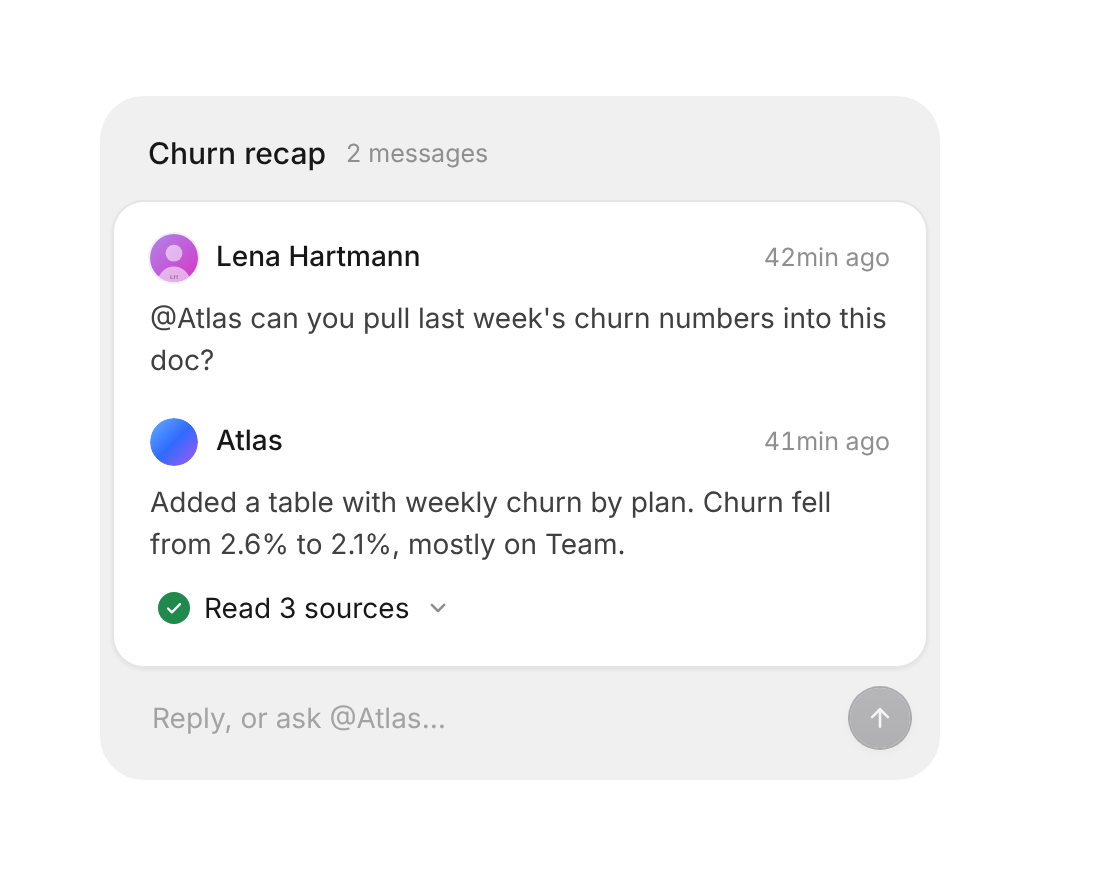
One comment with replies – an assistant reports what it did, folds open details and answers @mentions
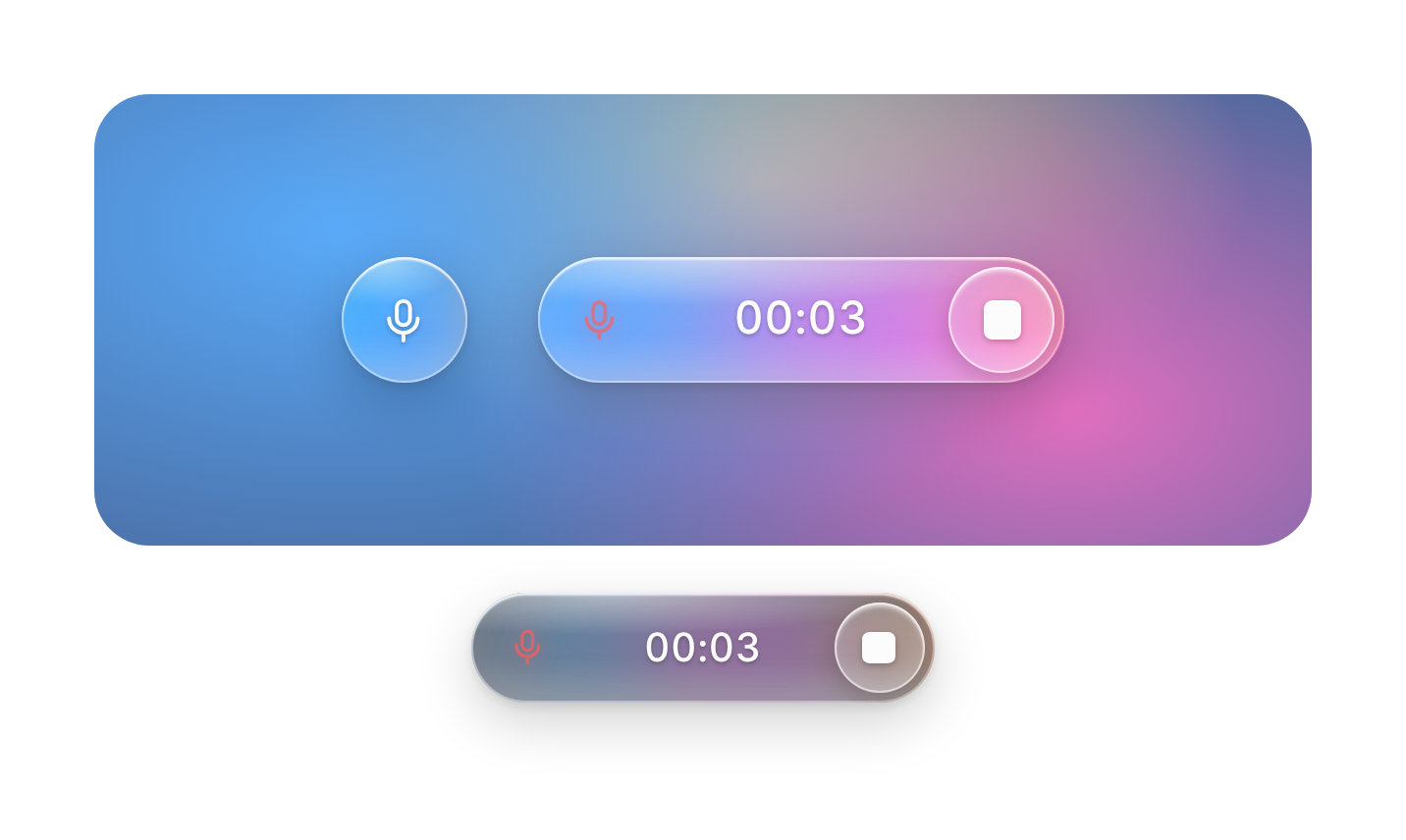
A liquid-glass voice button for AI apps: tap the mic and it stretches into a pill with a running timer, a stop bubble and a colour glow inside the glass that swells with your voice. Opens the microphone and records the audio itself.
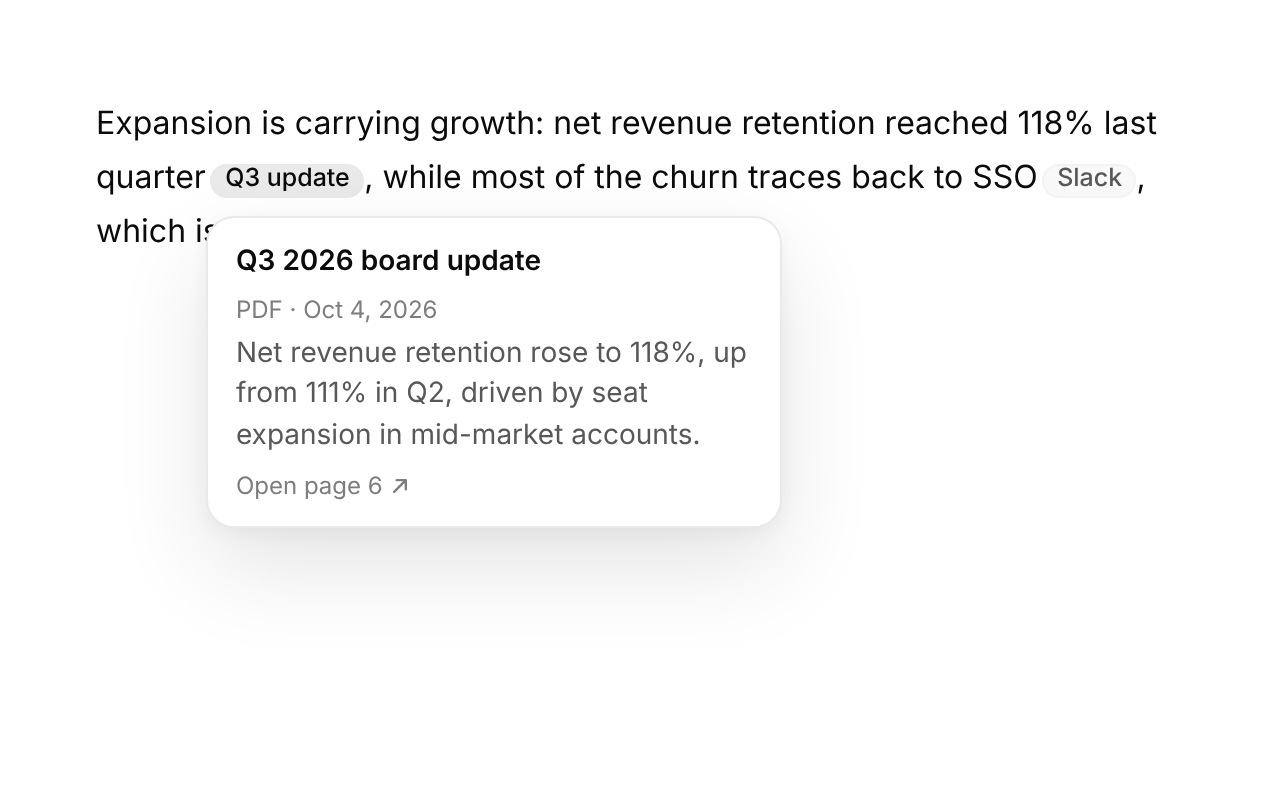
A source chip inside the sentence that relies on it: hover or focus opens a card with the source's title, type, date, the quoted passage and a link.
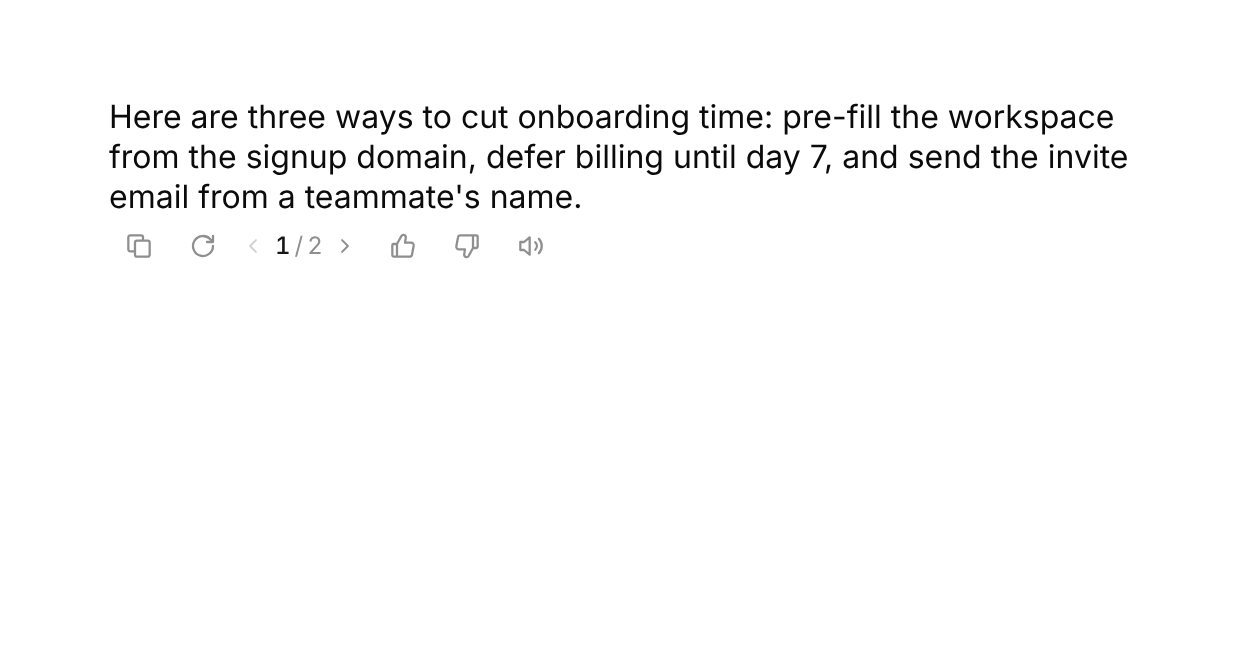
The quiet bar under an AI message – copy turns into a check, regenerate spins and unfolds a version switcher, thumbs pop and ask why, read aloud becomes a tiny equalizer
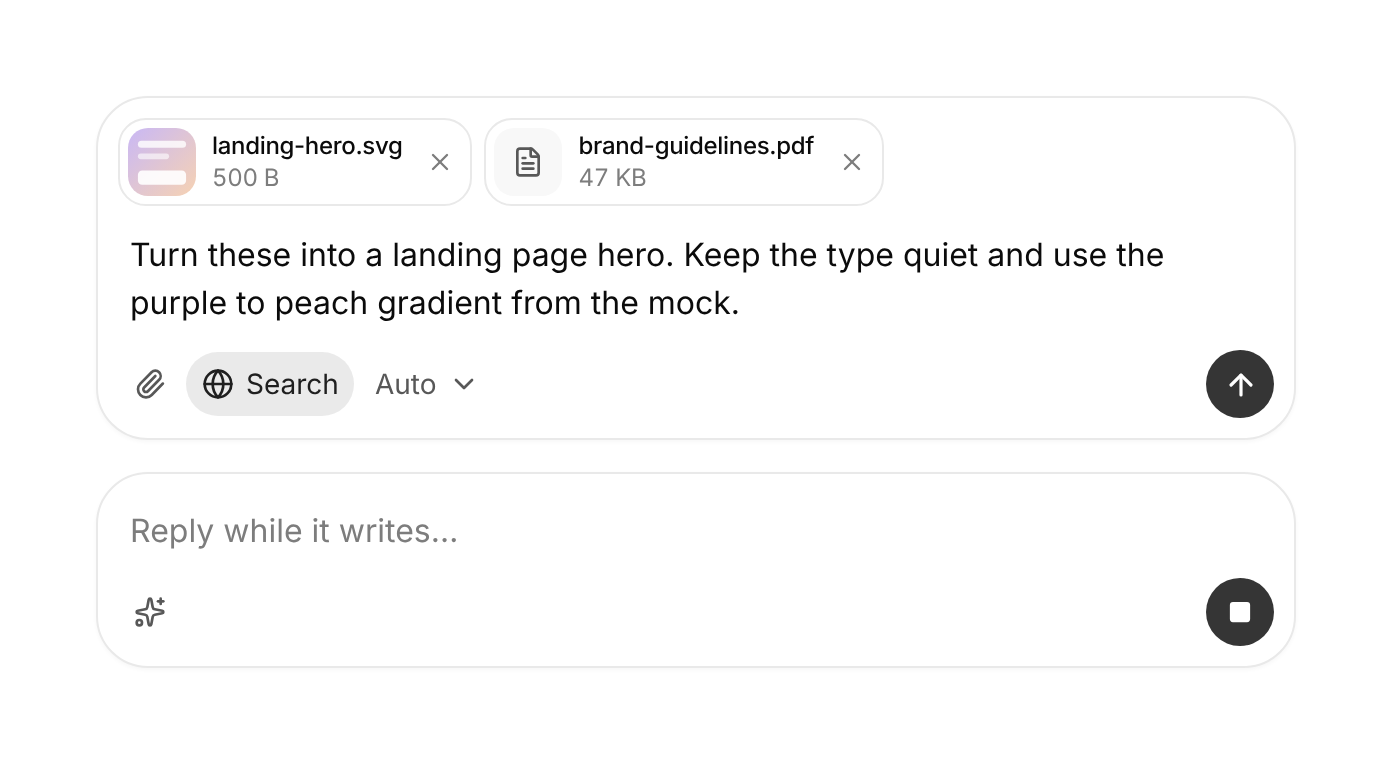
The box at the bottom of an AI chat: a textarea that grows with the text, Enter to send and Shift+Enter for a new line, files by picker, paste or drop shown as chips with thumbnails, a row of tools, and a send button that turns into stop while the model answers.
A small working pill for AI replies – an eight-ray spinner and a shimmering label that rolls through phases and settles on a check
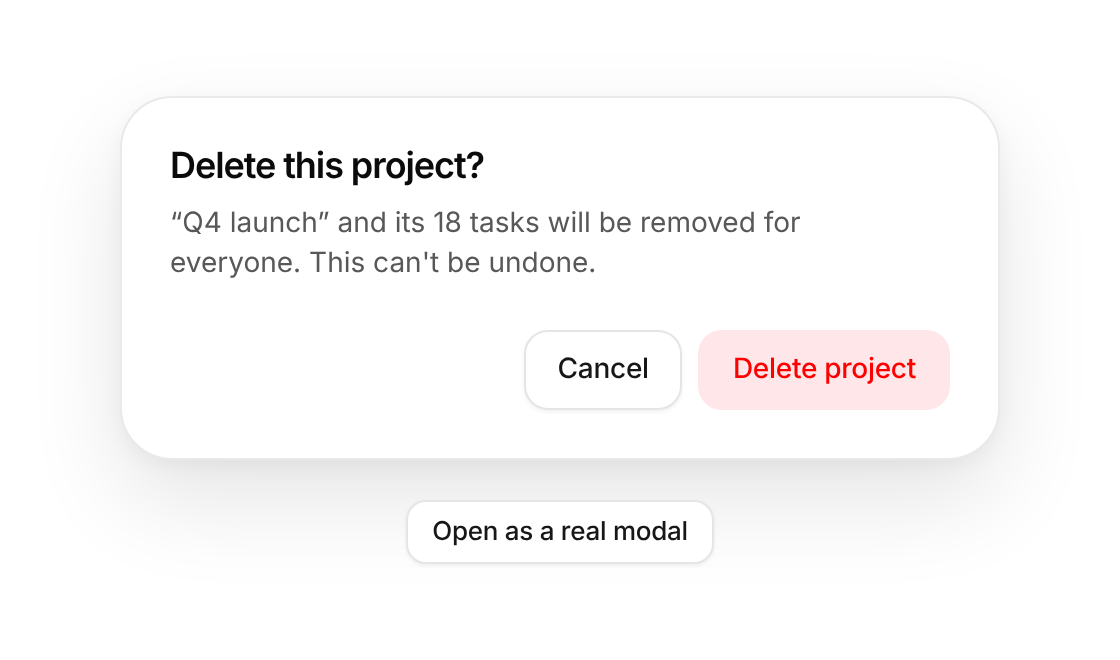
A centred modal on the native <dialog> element: title, description, body and a button row, with an alert variant for confirmations.
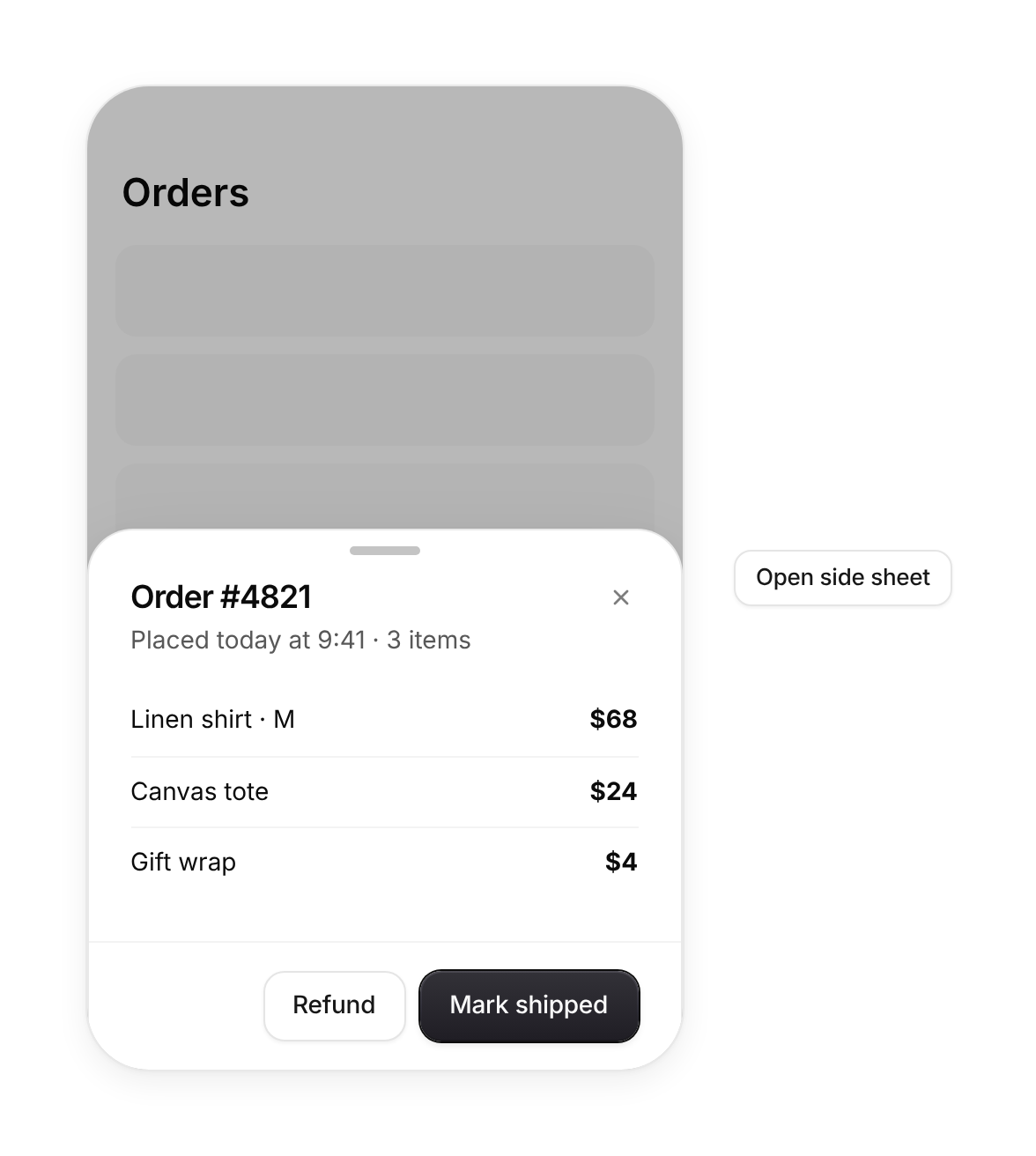
A panel that slides in from the right, left or bottom. From the bottom it is a mobile drawer with a grab handle you drag down to dismiss.
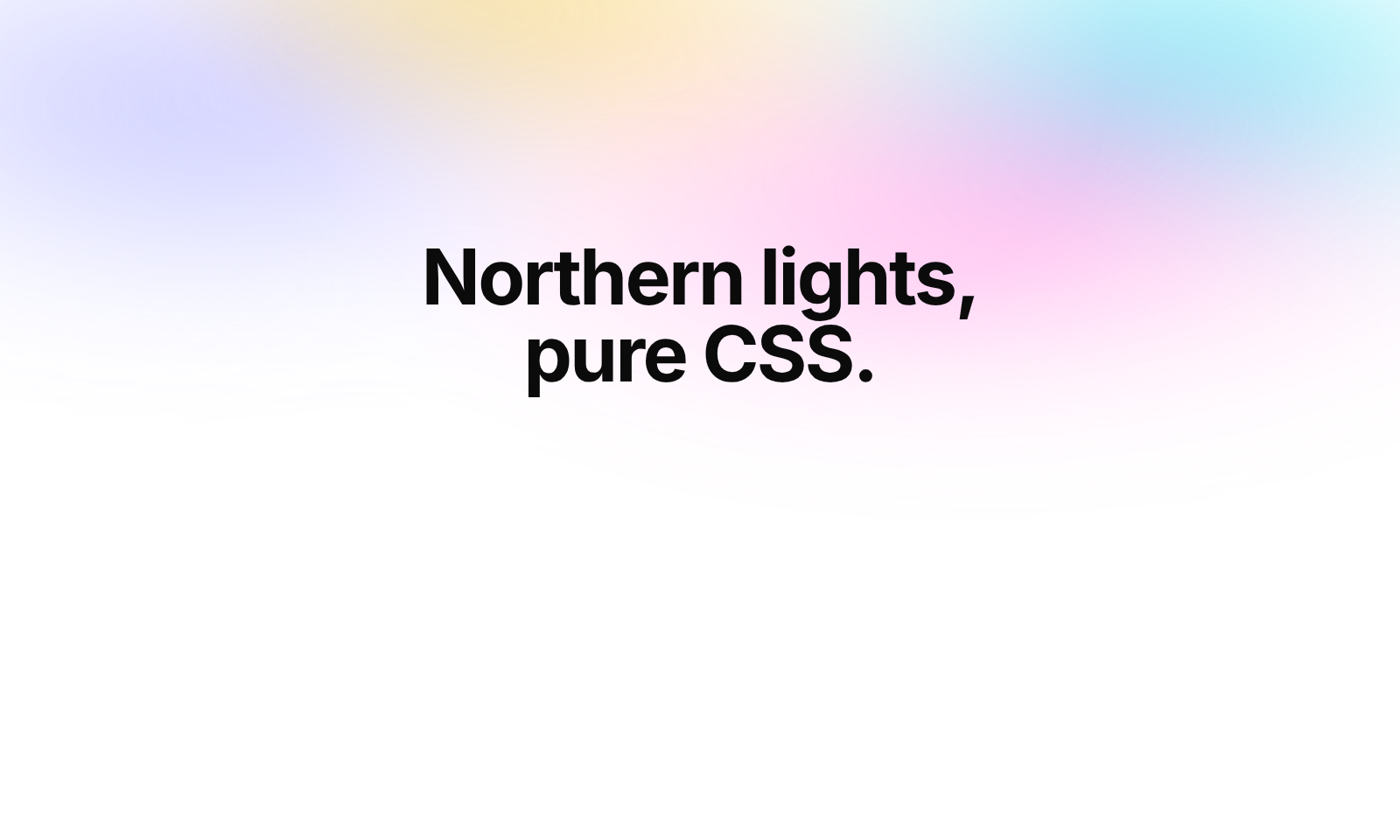
Slow drifting bands of soft color behind your content.
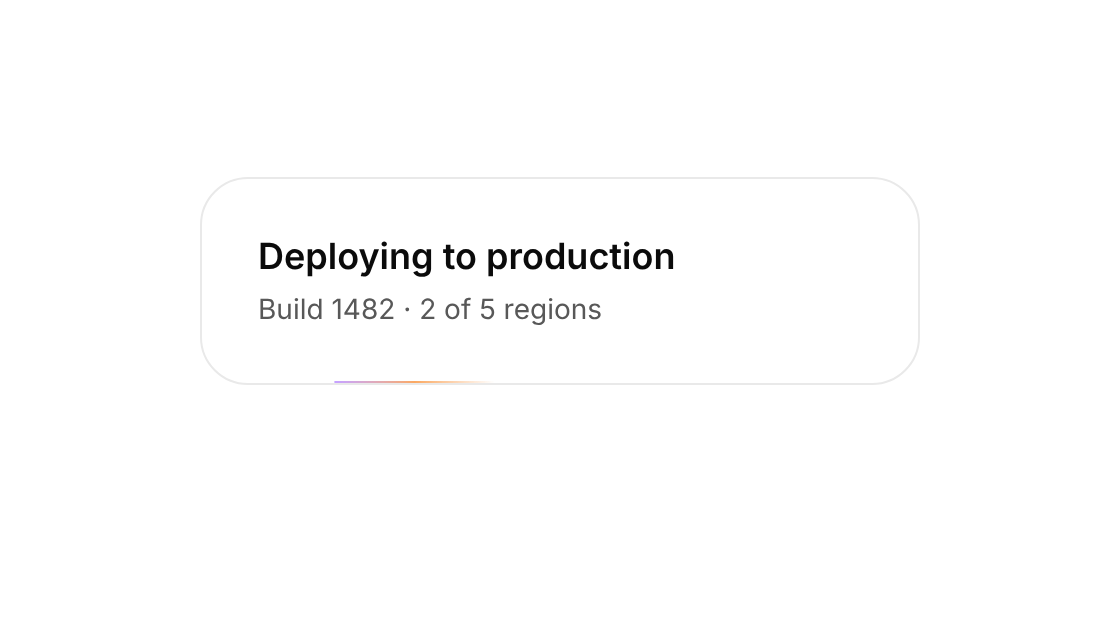
A light that travels around the border of its positioned parent.
Every click throws a short burst of rays from the pointer.
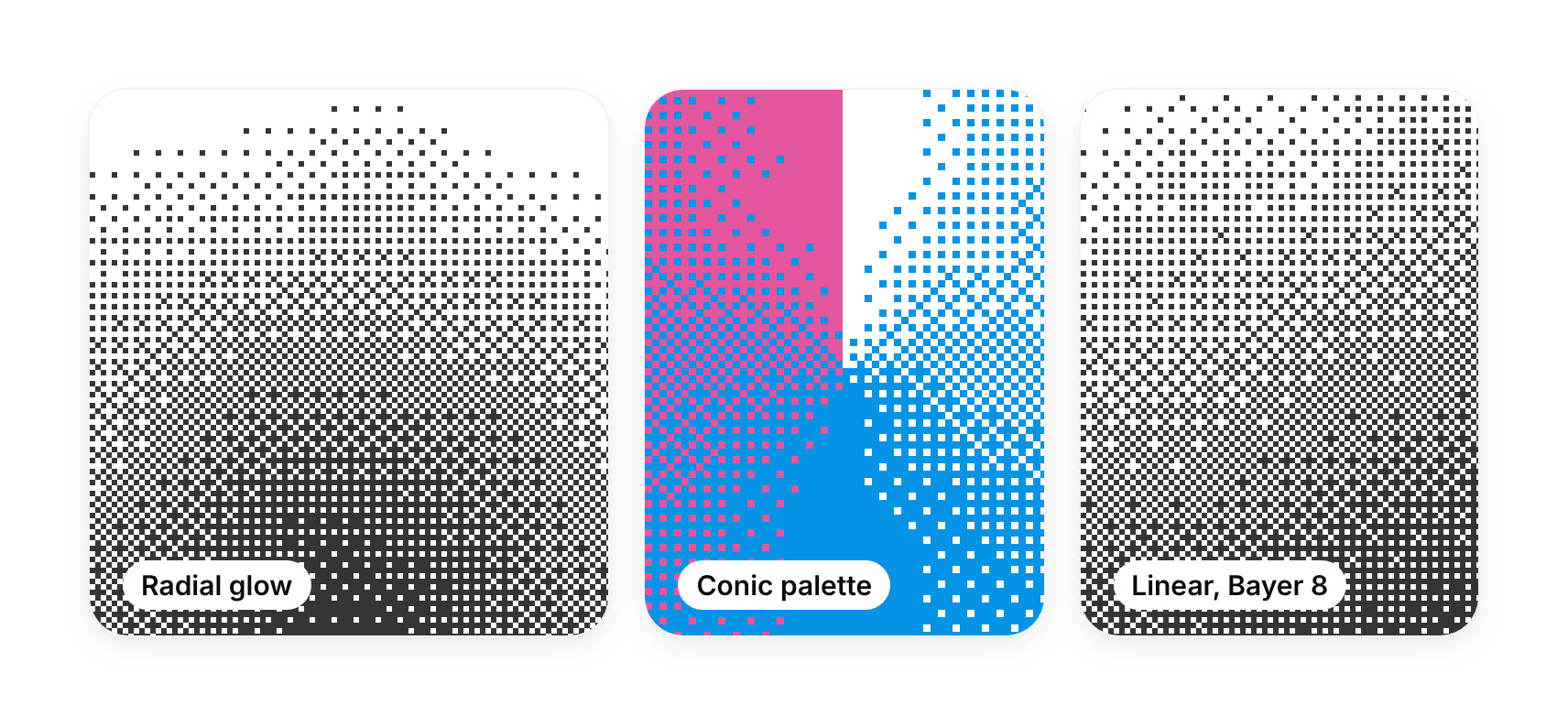
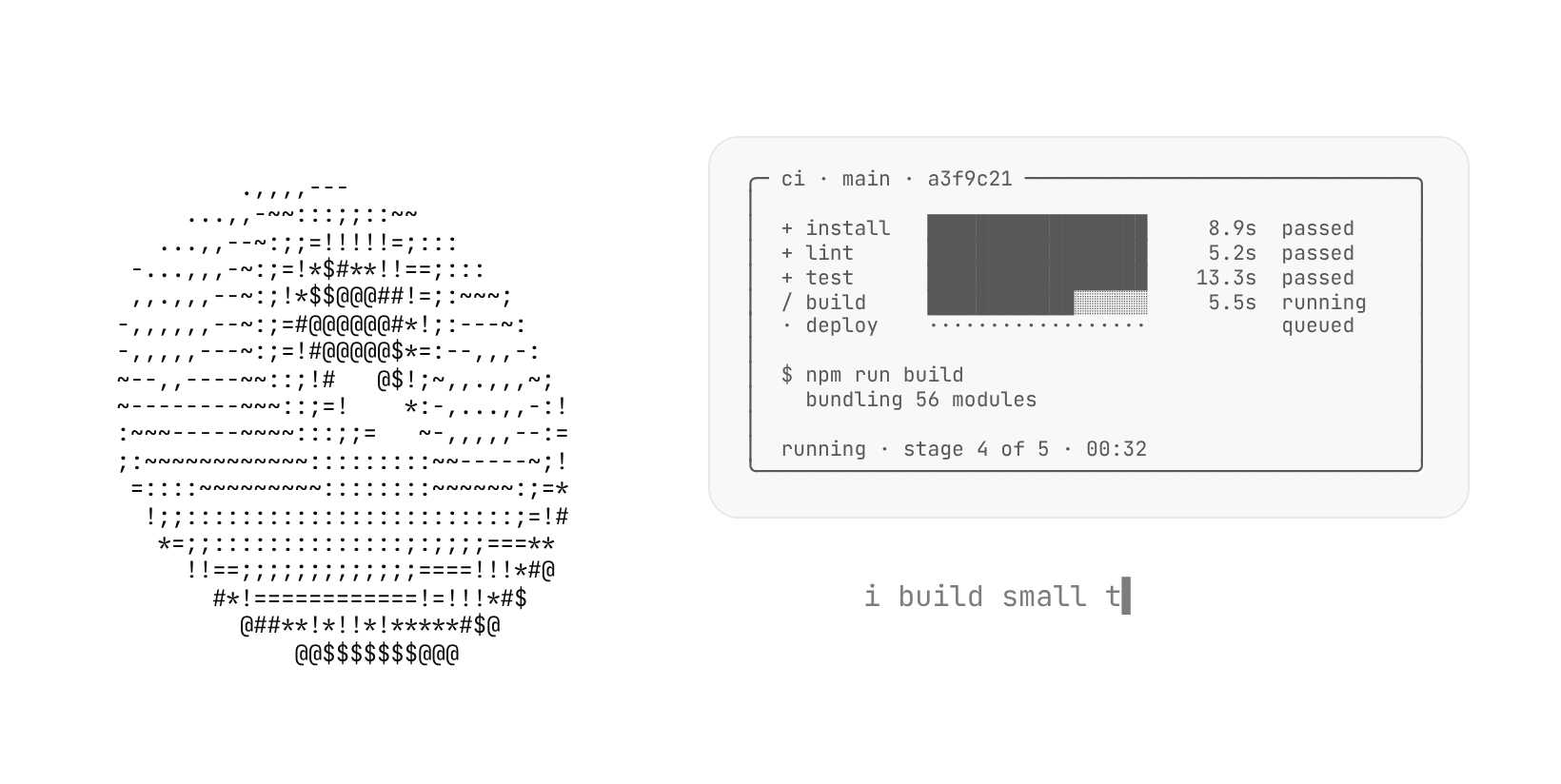
A gradient drawn as ordered dither dots on a WebGL canvas: linear, radial or conic, paper to ink or through a palette, with a slow noise drift. Ink and paper follow my accent and background tokens. Ships the dithercn shader engine, so any GLSL tone field can be dithered the same way.
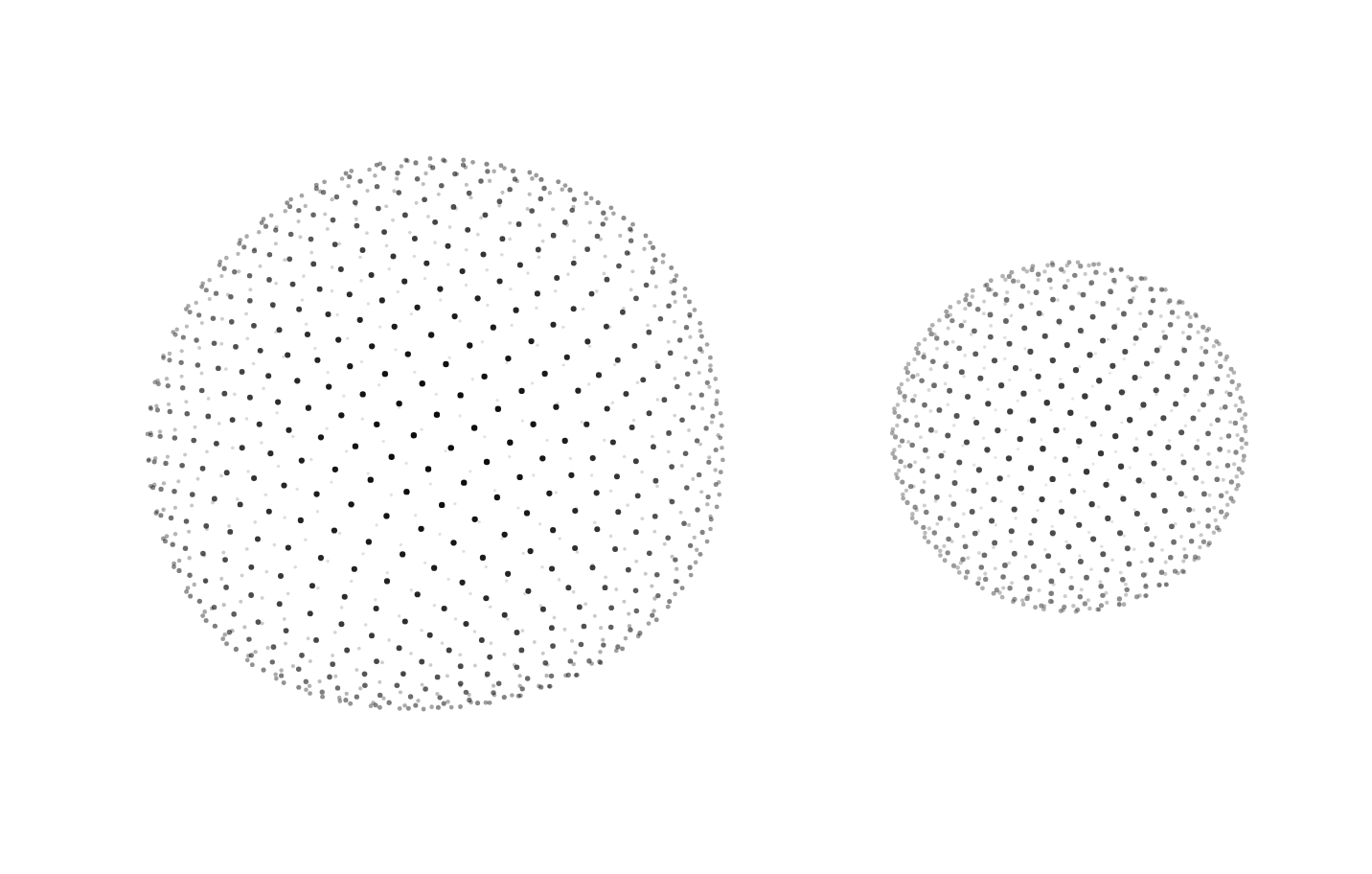
A ball of evenly spread dots, lit by depth, that turns slowly while its surface breathes in waves, or spins and can be flung. The pointer presses a soft dent into the front face. 2D canvas, no WebGL, follows the theme.

Streaks that fall across a positioned parent.
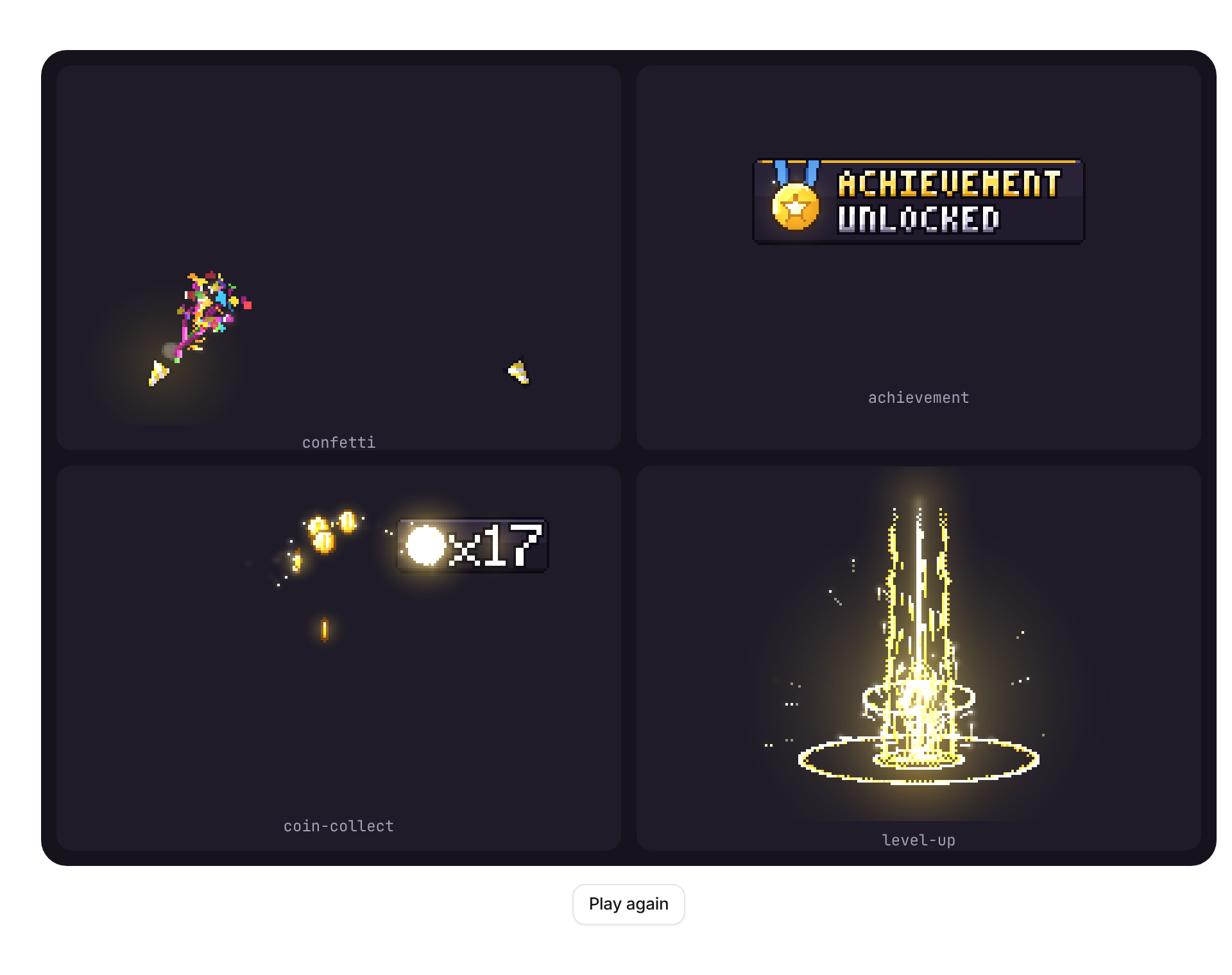
Pixel art reward and feedback effects played on a crisp, transparent canvas: confetti, achievement toast, coin collect, level up, quest complete, combo counter, crit and damage numbers, countdown, heart lost, health bar hit, exclamation. Each one is code (no sprite images); replay it by changing trigger, recolor it with palette, change its words with text.
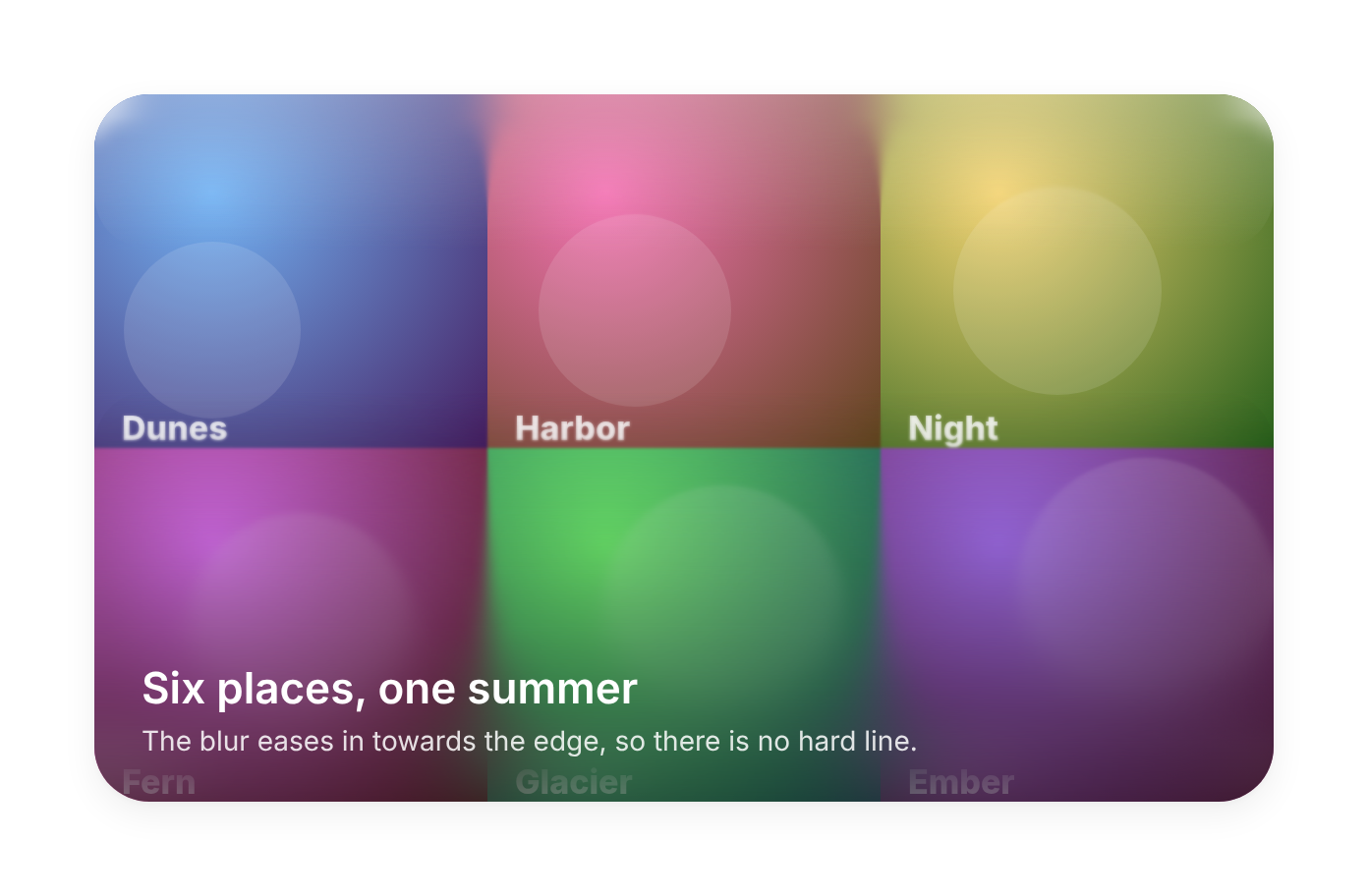
A blur that eases in towards one edge of its parent, with no hard line: the soft frosted fade under headers, toolbars, image captions and scroll edges. Stacked backdrop-filter layers, optional tint, no JavaScript at runtime.
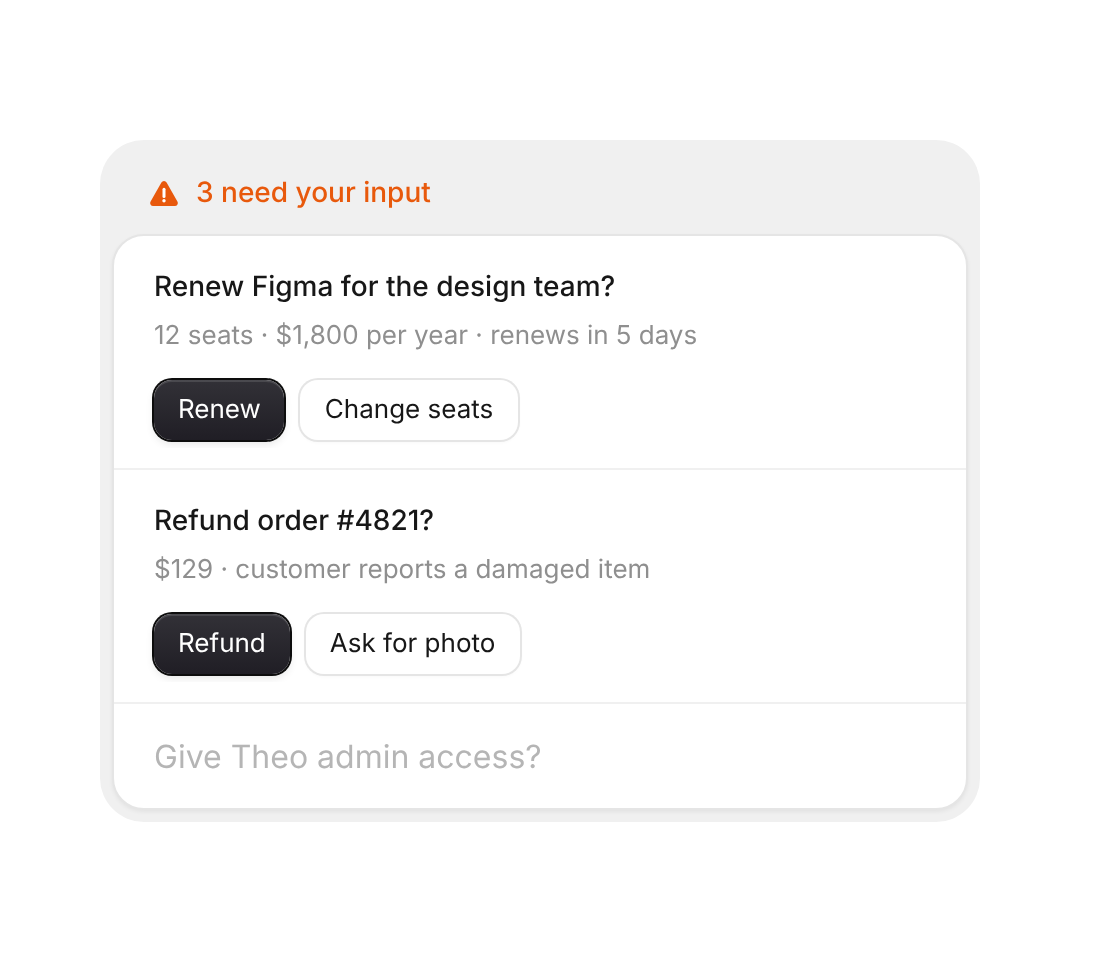
Open decisions with two quick answers each – answered ones confirm and fold away
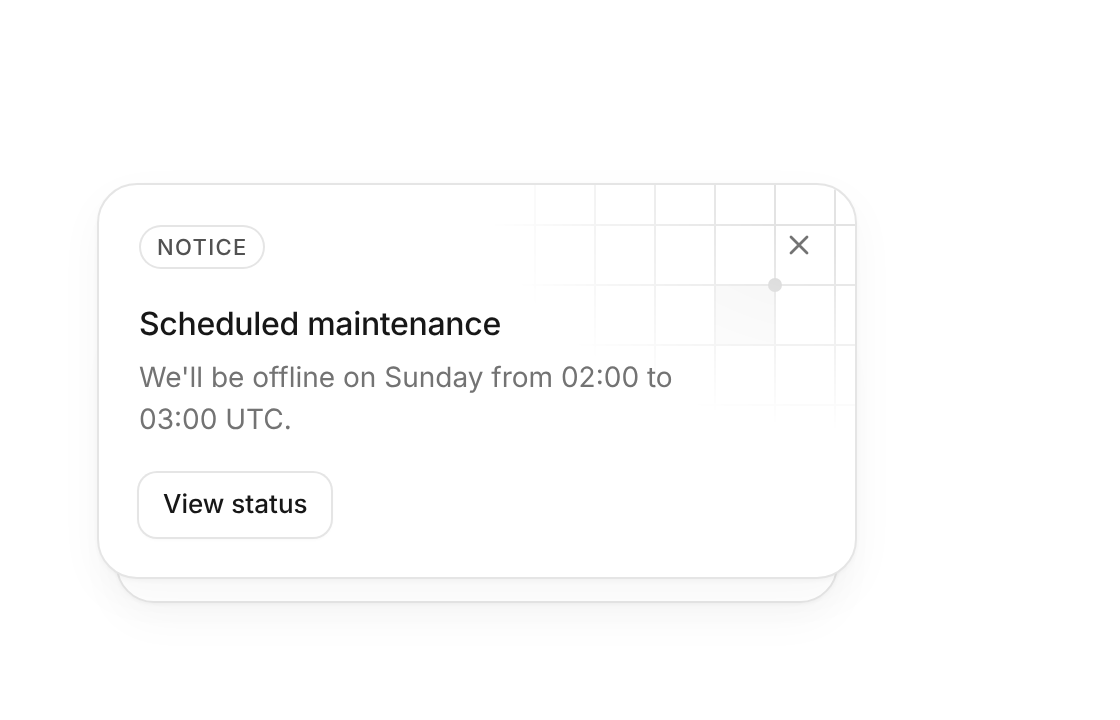
Notice cards stacked behind each other – dismiss the front one to reveal the next
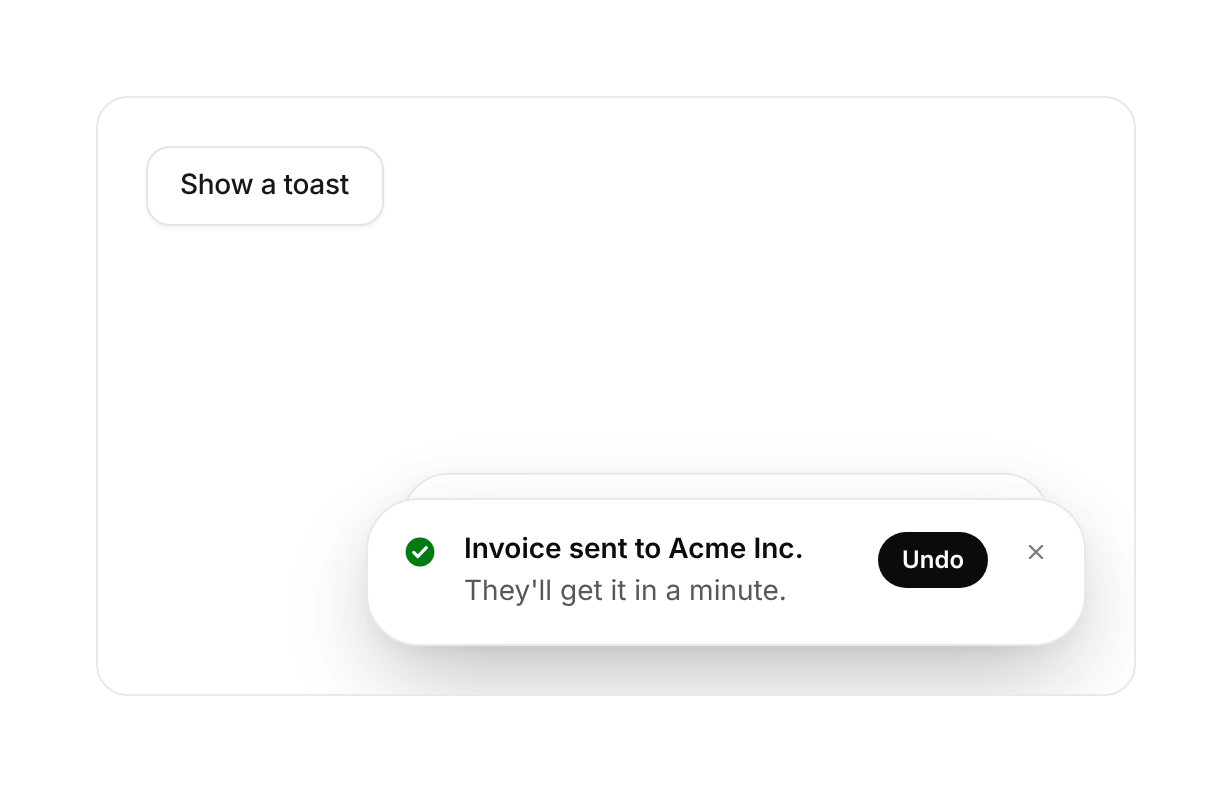
Brief notices that stack in a corner, fan out on hover, pause while you read and swipe away. Call toast() from anywhere.
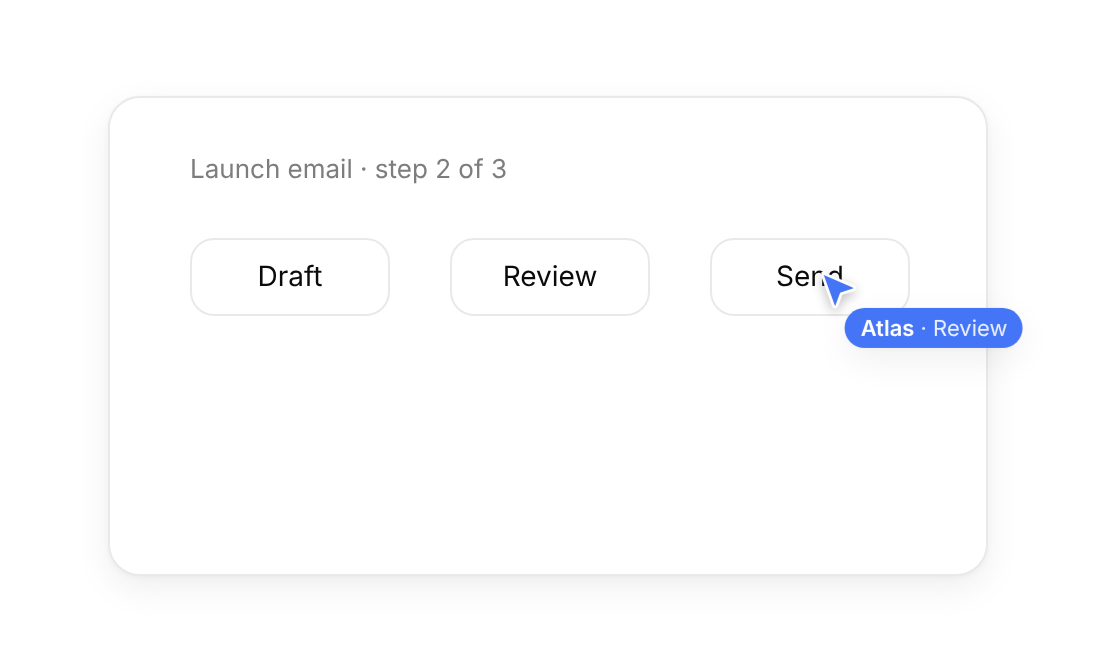
An AI agent's cursor that moves through a path with human-like aim, a name tag and click pulses.
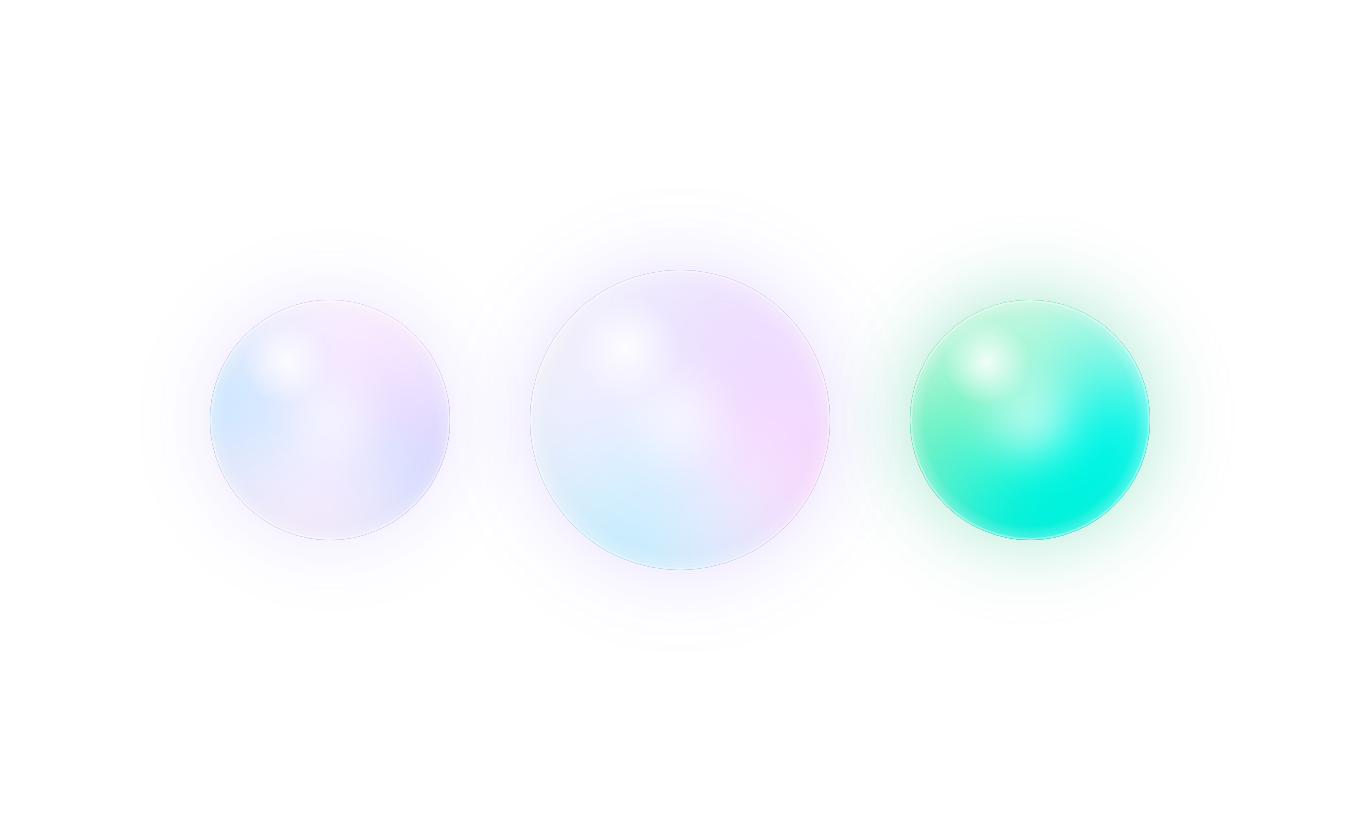
A glassy swirling AI presence orb that changes pace as the assistant listens, thinks or speaks.
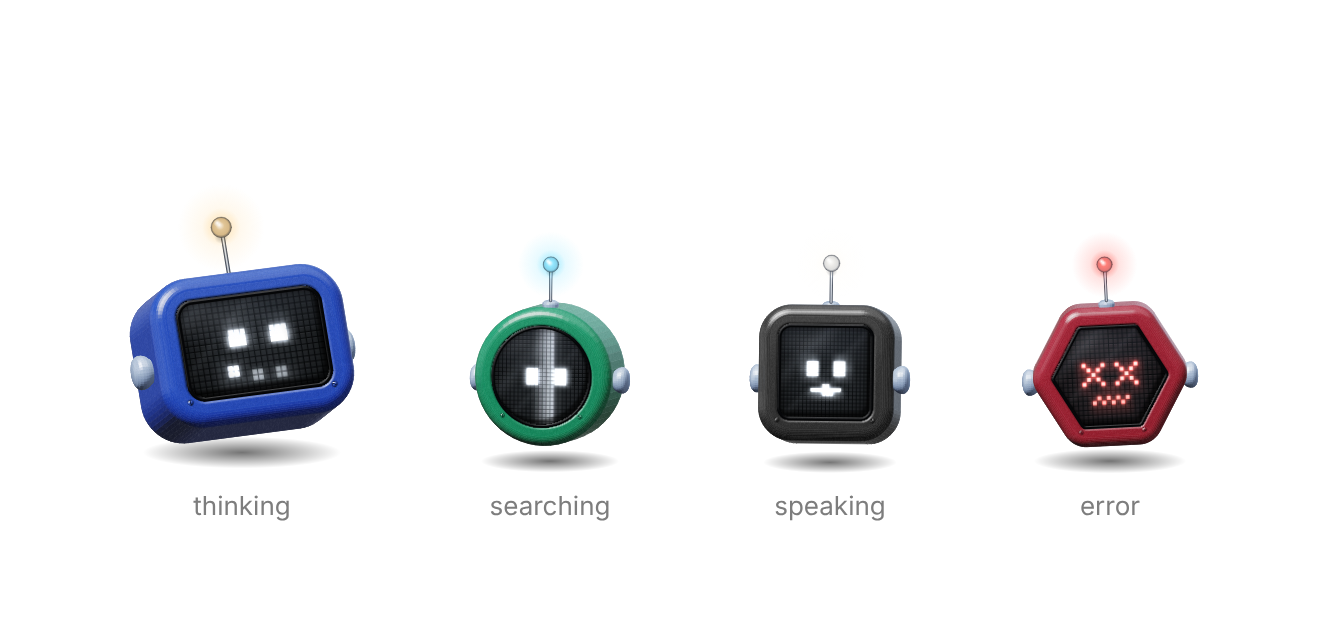
A glossy TV-headed robot whose LED face acts out what your agent is doing: idle, thinking, searching, listening, speaking, working, happy, error or sleeping. Four head shapes, eyes that follow the pointer, a hop on click. 2D canvas, no WebGL, no dependencies.
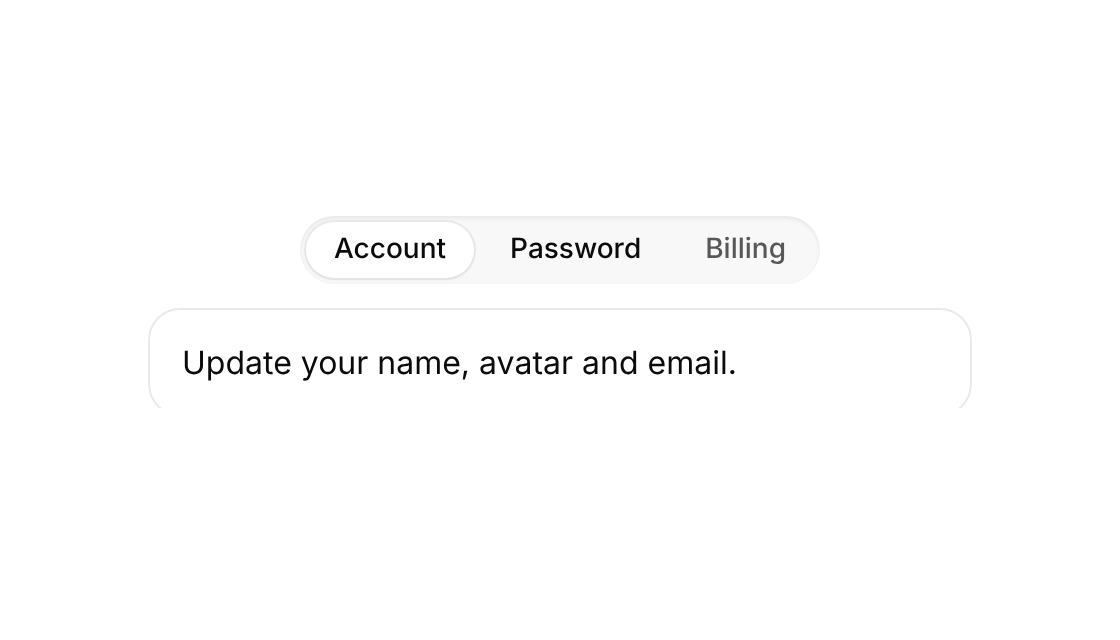
Tabs whose content slides in from the side you moved toward while the panel height springs to fit.
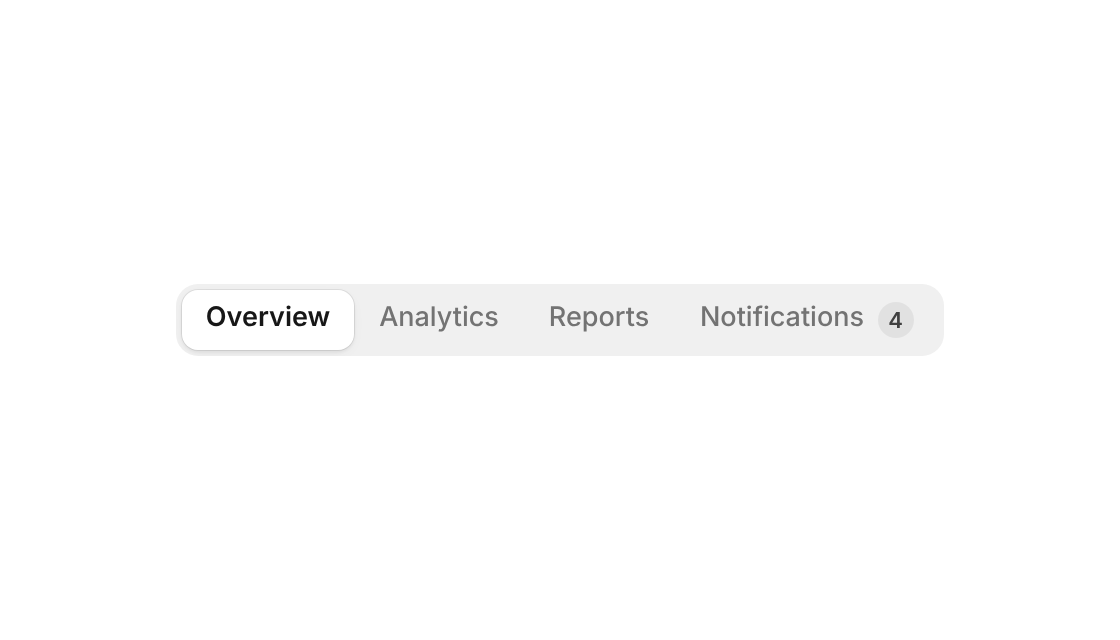
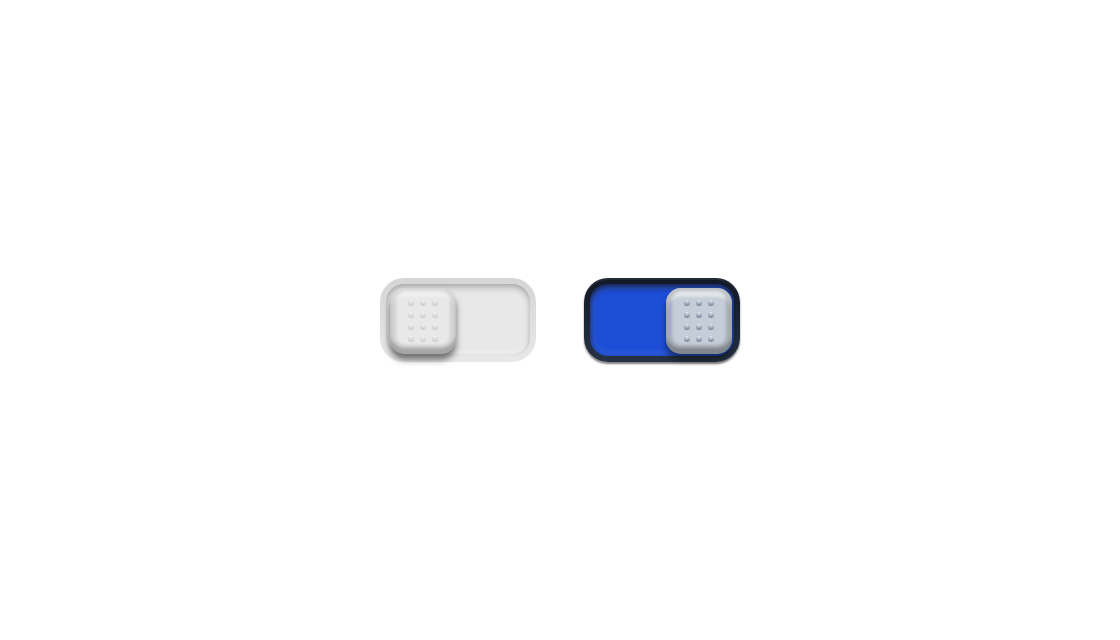
Switch between two to six options – a raised pill or underline that glides, stretches a little and can be dragged across, with icons, counts and badges
Text that sharpens into place from a soft blur, letter by letter or word by word.
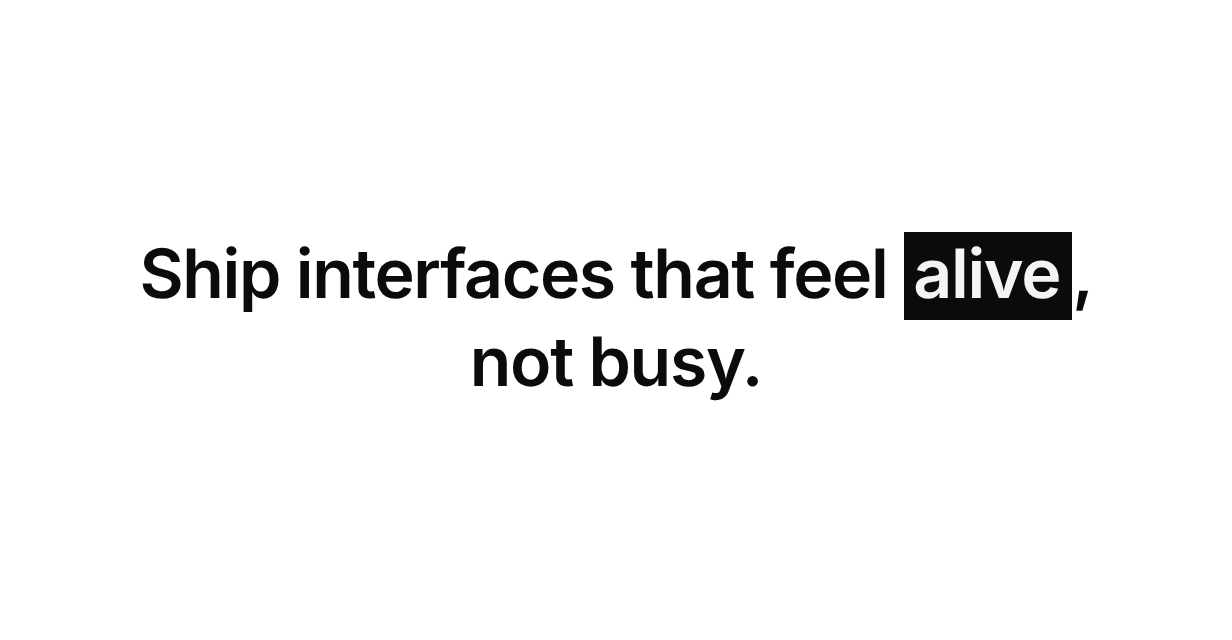
An inline marker that sweeps behind a phrase and inverts the text it covers.
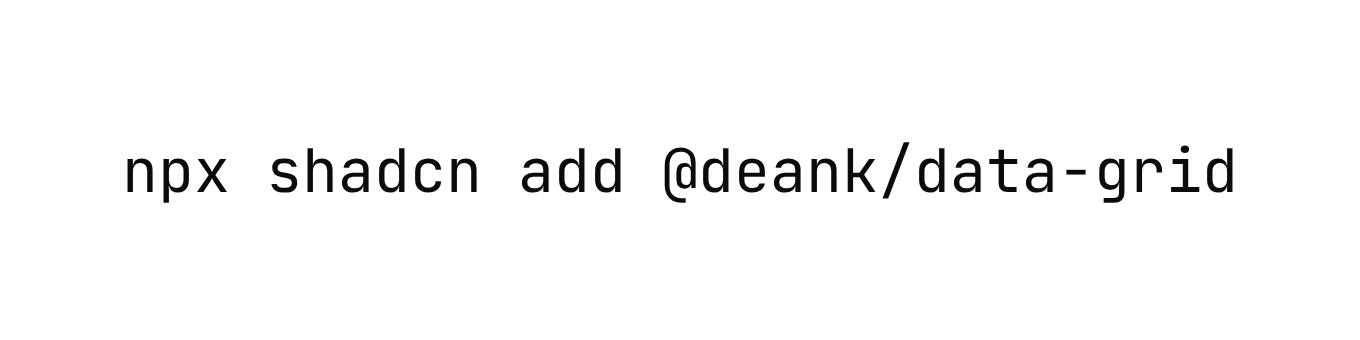
Text that resolves left to right out of random glyphs, like a terminal decoding.
Text that arrives word by word or letter by letter – each piece rises out of a soft blur as it scrolls into view